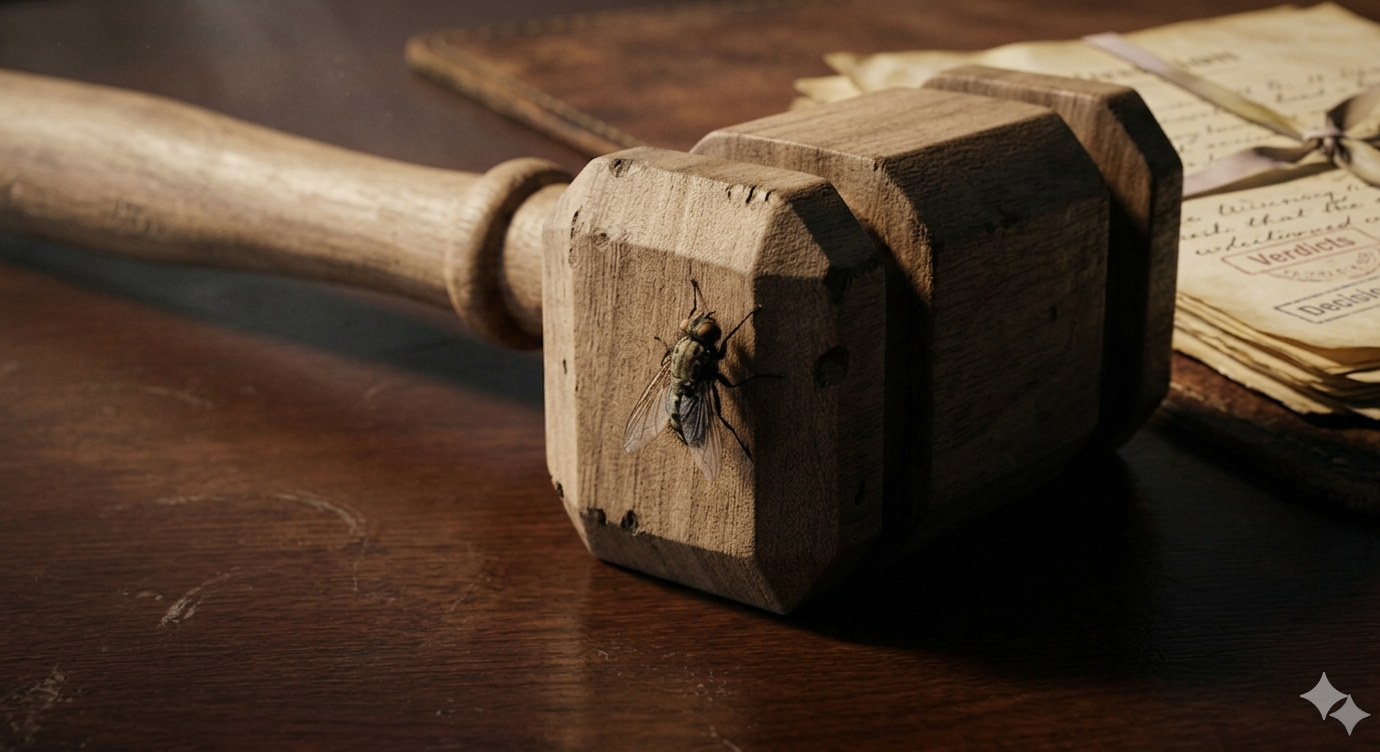
Three days. Three nights. One gavel.
I. THREE DAYS
First Night
The fan pushed hot air from one corner to the other. That was all it knew how to do.
The judge lay on his back, on top of the sheet, staring at the ceiling. The ceiling was white, with a crack running from the window to the chandelier — the chandelier he had seen every night for the past twenty-two years and never fixed. The crack was the length of a human life.
Three days. Then — retirement. Then — nothing.
A fly appeared around midnight. He swatted it away — it came back. He swatted again — it came back again. He lay still, listening to it circle above his ear.
The body began to remember before the mind.
Not faces — details. A hand reaching across the table with an envelope. A heavy hand, with a ring on the ring finger, and on the ring — a crest. He didn't remember the face, but the hand — he remembered that exactly. Then — a sound. A cell door closing is not like an ordinary door. There is something final in it, something no other sound in the world has.
He got up. Drank water straight from the tap. Stood by the window.
The city slept in the heat and knew nothing about him.
The fly found him by the window.
· · ·
Second Night
A young teacher. History classroom, public school, outskirts of the city. He was accused of incitement — a word that could stretch like rubber to whatever size was needed. The judge knew he was innocent. That was no secret. But the case was convenient — and the judge was smart.
He didn't remember the teacher's face.
He remembered the hat.
The teacher held his hat throughout the entire hearing — kneading the brim, smoothing it, kneading it again. It was a cheap hat, grey, with a worn band. The teacher's hands worked on their own while their owner listened to them read out something he hadn't done. The judge watched those hands from the bench and thought: why did he bring the hat? He should have left it in the cloakroom. In the cloakroom it wouldn't have suffered.
A fly landed on his wrist.
The judge looked at it for a second — a dark speck on white skin — then looked away.
That night he remembered another one. A young accountant he had sent to prison in place of the real boss. The boss had sent a man with an envelope, then another man with a name — a name to write down instead of his own. The accountant was diligent, quiet, rented a room downtown and was going to marry a girl from a good family. He never married. Three years later he came out a different man — the judge saw him once at the market; they looked at each other — and parted.
The teacher's hat. The accountant's face at the market. The hand with the ring.
The fan pushed hot air from one corner to the other.
· · ·
Third Night
The file had been lying on the desk since evening.
Thin. Almost ridiculous — he was used to files that weighed like bricks, containing everything: investigation, witnesses, character references, photographs. But here — a few sheets. Petty fraud involving some little shop. First offence. A young man who was unlucky enough to get caught.
He didn't open it. Just looked.
Now there were several flies. They didn't buzz much — they just existed. On the edge of the glass. On the cover of the file. One crawled across the desk busily, as if it had a schedule. He watched them and did not swat them away. They had always been there. He simply hadn't looked before.
At some point — around three, probably — he laughed. Quietly, almost soundlessly.
The file said: «unauthorised trading», and something about invoices, and something about a difference in amount that was less than the judge had left as a tip in a restaurant yesterday. He wasn't laughing at the boy. He was laughing at how everything else worked. At himself, too — at the fact that he was sitting here with this thin file at three in the morning, unable to sleep, flies crawling on the desk, the fan pushing hot air, and in three days — retirement, and the briefcase he had carried for twenty-two years would stay with him, because where else could it go?
Then he stopped laughing.
He got up, drank some water, lay down.
He didn't pray — he didn't know to whom.
II. THE LAST HEARING
The courtroom was the same as always: wooden panels darkened by time and human warmth, a fan doing the same thing under the ceiling as the one at home. The smell was familiar — sweat, old paper, something else indefinite that accumulates in a room where other people's fates are decided year after year.
The flies were here too.
The boy sat on the bench, looking straight ahead. Not handsome, not a villain. Just young — twenty-two, twenty-three, his face not yet settled, several future faces readable in it at once. A little frightened, a little defiant, as the young are when facing something they don't fully understand.
The judge looked at him and did not see him.
He saw the teacher with the hat. The accountant from the market. A woman — he couldn't remember her name, but she had existed, and her case had existed, and in her case everything had been just as convenient as usual. He saw others too, many others — too many to count, but the body counted on its own, the way it counts debts without the mind's involvement.
The prosecutor presented the case. The defence said something. The boy sat and watched.
The judge thought: I cannot bring back those others. This one — I can.
Then he thought: but what does that mean in the arithmetic of everything else?
And he answered himself: one. No more. But no less.
He took the gavel.
— Two weeks of community service. Street cleaning.
The room was silent a second longer than usual. The prosecutor raised his eyes from the papers — with an expression as if he hadn't heard correctly. The boy blinked. The defence counsel, it seemed, also didn't understand at first.
The gavel struck the desk.
Court adjourned.
III. AFTER
He walked out of the building with his briefcase.
The heat outside was the same as inside — just without a ceiling overhead. He walked down the street carrying the briefcase the way he had carried it for twenty-two years: in his right hand, his torso tilted slightly left for balance. Heavy. Always heavy.
He hadn't left it in his office. He had thought about it — to put it under the desk and walk away, just walk away, light. But he couldn't. Or didn't want to. He no longer understood the difference.
A week later he sat in a cafe by the window with coffee that had gone cold while he looked at the street.
The boy was sweeping the pavement opposite.
He swept irritably — that was visible even through the glass. The broom was uncomfortable, or the heat was unbearable, or pedestrians were in the way, or all of it together. He would stop, wipe the sweat from his forehead, look somewhere to the side with an expression that suggested he was thinking of something else — about the evening, perhaps, about a girl, about the fact that this would all be over in nine days and never again.
He did not look towards the cafe.
The judge finished his cold coffee and stood up.
He picked up the briefcase.
He left.
EPILOGUE
The space was empty.
The heat — the same. No flies. And that was more terrible than if they had remained.
He tried to set the briefcase down — couldn't. The briefcase was open, and everything that had been inside was now around him. Not as accusations. As faces.
They did not shout, did not demand — they just looked. The teacher held his hat in his hands. The accountant stood the way he had stood at the market. The woman whose name he could not remember — her face he now knew forever.
· · ·
There was no judge before him.
Before him stood himself — young. The man he had been before the first envelope, before the first «everyone does it», before the first compromise that had seemed so small and so reasonable.
The young man looked at the old one. Without hatred. Without forgiveness. Just looked.
· · ·
Among the faces was the boy. He stood apart — not among the others. Just nearby. He looked the same as all the others. He did not thank.
He had been granted — to look from the other side.
· · ·
He wanted to lower the briefcase — couldn't.
The heat subsided.
The briefcase remained with him.
First Night
The fan pushed hot air from one corner to the other. That was all it knew how to do.
The judge lay on his back, on top of the sheet, staring at the ceiling. The ceiling was white, with a crack running from the window to the chandelier — the chandelier he had seen every night for the past twenty-two years and never fixed. The crack was the length of a human life.
Three days. Then — retirement. Then — nothing.
A fly appeared around midnight. He swatted it away — it came back. He swatted again — it came back again. He lay still, listening to it circle above his ear.
The body began to remember before the mind.
Not faces — details. A hand reaching across the table with an envelope. A heavy hand, with a ring on the ring finger, and on the ring — a crest. He didn't remember the face, but the hand — he remembered that exactly. Then — a sound. A cell door closing is not like an ordinary door. There is something final in it, something no other sound in the world has.
He got up. Drank water straight from the tap. Stood by the window.
The city slept in the heat and knew nothing about him.
The fly found him by the window.
· · ·
Second Night
A young teacher. History classroom, public school, outskirts of the city. He was accused of incitement — a word that could stretch like rubber to whatever size was needed. The judge knew he was innocent. That was no secret. But the case was convenient — and the judge was smart.
He didn't remember the teacher's face.
He remembered the hat.
The teacher held his hat throughout the entire hearing — kneading the brim, smoothing it, kneading it again. It was a cheap hat, grey, with a worn band. The teacher's hands worked on their own while their owner listened to them read out something he hadn't done. The judge watched those hands from the bench and thought: why did he bring the hat? He should have left it in the cloakroom. In the cloakroom it wouldn't have suffered.
A fly landed on his wrist.
The judge looked at it for a second — a dark speck on white skin — then looked away.
That night he remembered another one. A young accountant he had sent to prison in place of the real boss. The boss had sent a man with an envelope, then another man with a name — a name to write down instead of his own. The accountant was diligent, quiet, rented a room downtown and was going to marry a girl from a good family. He never married. Three years later he came out a different man — the judge saw him once at the market; they looked at each other — and parted.
The teacher's hat. The accountant's face at the market. The hand with the ring.
The fan pushed hot air from one corner to the other.
· · ·
Third Night
The file had been lying on the desk since evening.
Thin. Almost ridiculous — he was used to files that weighed like bricks, containing everything: investigation, witnesses, character references, photographs. But here — a few sheets. Petty fraud involving some little shop. First offence. A young man who was unlucky enough to get caught.
He didn't open it. Just looked.
Now there were several flies. They didn't buzz much — they just existed. On the edge of the glass. On the cover of the file. One crawled across the desk busily, as if it had a schedule. He watched them and did not swat them away. They had always been there. He simply hadn't looked before.
At some point — around three, probably — he laughed. Quietly, almost soundlessly.
The file said: «unauthorised trading», and something about invoices, and something about a difference in amount that was less than the judge had left as a tip in a restaurant yesterday. He wasn't laughing at the boy. He was laughing at how everything else worked. At himself, too — at the fact that he was sitting here with this thin file at three in the morning, unable to sleep, flies crawling on the desk, the fan pushing hot air, and in three days — retirement, and the briefcase he had carried for twenty-two years would stay with him, because where else could it go?
Then he stopped laughing.
He got up, drank some water, lay down.
He didn't pray — he didn't know to whom.
II. THE LAST HEARING
The courtroom was the same as always: wooden panels darkened by time and human warmth, a fan doing the same thing under the ceiling as the one at home. The smell was familiar — sweat, old paper, something else indefinite that accumulates in a room where other people's fates are decided year after year.
The flies were here too.
The boy sat on the bench, looking straight ahead. Not handsome, not a villain. Just young — twenty-two, twenty-three, his face not yet settled, several future faces readable in it at once. A little frightened, a little defiant, as the young are when facing something they don't fully understand.
The judge looked at him and did not see him.
He saw the teacher with the hat. The accountant from the market. A woman — he couldn't remember her name, but she had existed, and her case had existed, and in her case everything had been just as convenient as usual. He saw others too, many others — too many to count, but the body counted on its own, the way it counts debts without the mind's involvement.
The prosecutor presented the case. The defence said something. The boy sat and watched.
The judge thought: I cannot bring back those others. This one — I can.
Then he thought: but what does that mean in the arithmetic of everything else?
And he answered himself: one. No more. But no less.
He took the gavel.
— Two weeks of community service. Street cleaning.
The room was silent a second longer than usual. The prosecutor raised his eyes from the papers — with an expression as if he hadn't heard correctly. The boy blinked. The defence counsel, it seemed, also didn't understand at first.
The gavel struck the desk.
Court adjourned.
III. AFTER
He walked out of the building with his briefcase.
The heat outside was the same as inside — just without a ceiling overhead. He walked down the street carrying the briefcase the way he had carried it for twenty-two years: in his right hand, his torso tilted slightly left for balance. Heavy. Always heavy.
He hadn't left it in his office. He had thought about it — to put it under the desk and walk away, just walk away, light. But he couldn't. Or didn't want to. He no longer understood the difference.
A week later he sat in a cafe by the window with coffee that had gone cold while he looked at the street.
The boy was sweeping the pavement opposite.
He swept irritably — that was visible even through the glass. The broom was uncomfortable, or the heat was unbearable, or pedestrians were in the way, or all of it together. He would stop, wipe the sweat from his forehead, look somewhere to the side with an expression that suggested he was thinking of something else — about the evening, perhaps, about a girl, about the fact that this would all be over in nine days and never again.
He did not look towards the cafe.
The judge finished his cold coffee and stood up.
He picked up the briefcase.
He left.
EPILOGUE
The space was empty.
The heat — the same. No flies. And that was more terrible than if they had remained.
He tried to set the briefcase down — couldn't. The briefcase was open, and everything that had been inside was now around him. Not as accusations. As faces.
They did not shout, did not demand — they just looked. The teacher held his hat in his hands. The accountant stood the way he had stood at the market. The woman whose name he could not remember — her face he now knew forever.
· · ·
There was no judge before him.
Before him stood himself — young. The man he had been before the first envelope, before the first «everyone does it», before the first compromise that had seemed so small and so reasonable.
The young man looked at the old one. Without hatred. Without forgiveness. Just looked.
· · ·
Among the faces was the boy. He stood apart — not among the others. Just nearby. He looked the same as all the others. He did not thank.
He had been granted — to look from the other side.
· · ·
He wanted to lower the briefcase — couldn't.
The heat subsided.
The briefcase remained with him.
The most terrible judgment is the one
where the judge already knows the verdict
The end.
#MrJudge, #IncubatorNovella8, #MetaphysicalParable, #ThreeDaysThreeNightsOneHammer, #FinalHearing, #IskandarKadyrov