
"When the form remains, and the faith is gone."
Part I. The Mentor
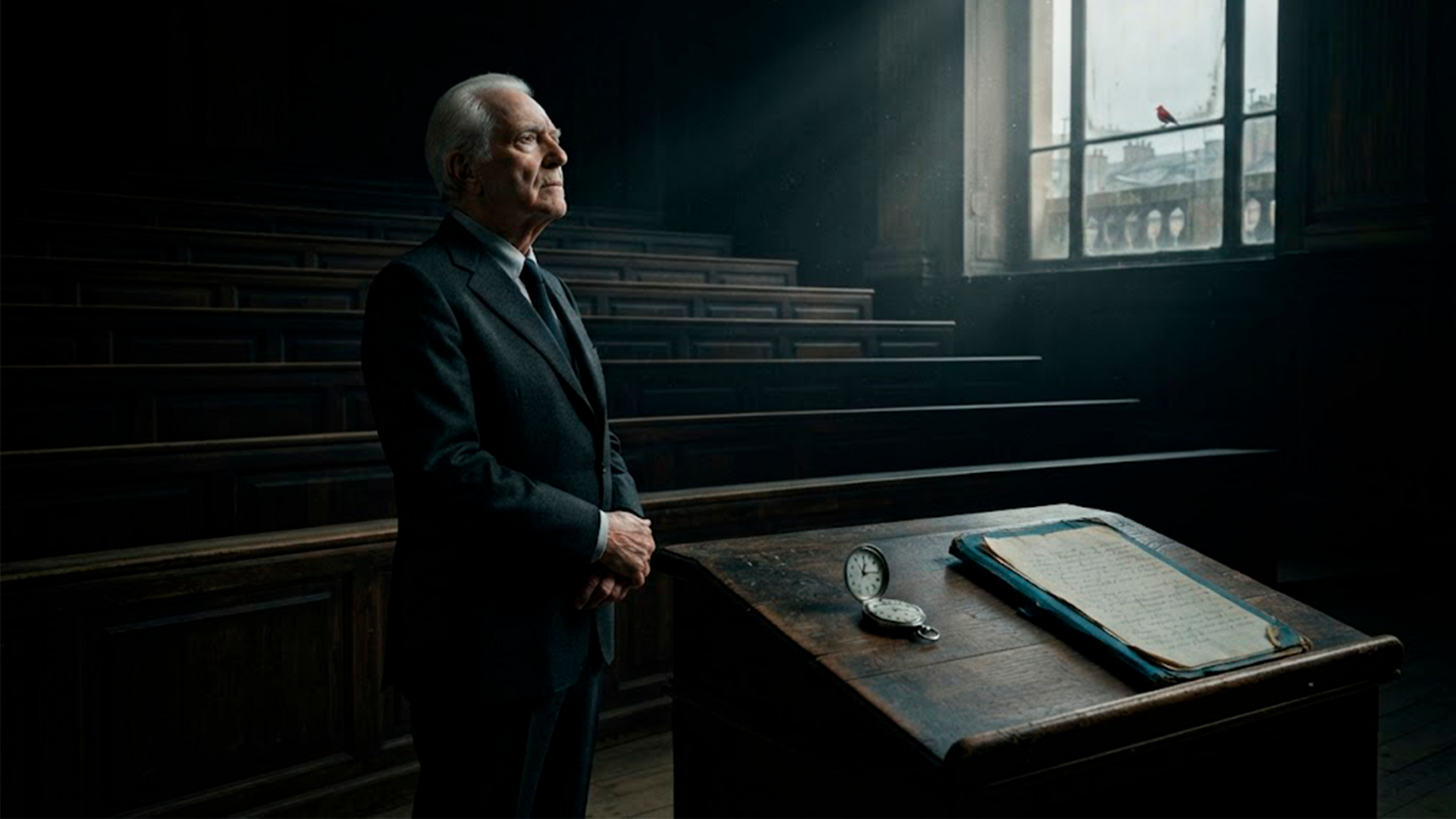
He arrived at the lecture hall twelve minutes early — as he always had, for thirty-one years running, whether the lecture was the first of the semester or the last of his life.
Room 104 smelled of chalk and the autumn damp that had worked its way in through the swollen window frame. He set his folder of notes on the lectern — the same folder, the same one, its faded blue cover carrying a new year's markings scrawled over the old ones every autumn, until the page had come to resemble a map with too many layers, its topography no longer legible. He ran his palm over the cover. Took the watch from his vest pocket.
The watch had been his father's — its case dulled, the initials on it still faintly legible, though they weren't his own. He flipped the lid open with his thumb — his thumb trembled more in the mornings than he cared to admit — by habit, without looking, and without looking put the watch away again. He knew what time it was from the window, from the hum in the corridor, from the way the students dropped their bags into their seats. The watch couldn't have told him. Its hands had stood at seven fifteen for eleven years now — since the winter he'd forgotten to wind it and decided he never would again. The gesture had stayed. The meaning had left before he'd noticed it going.
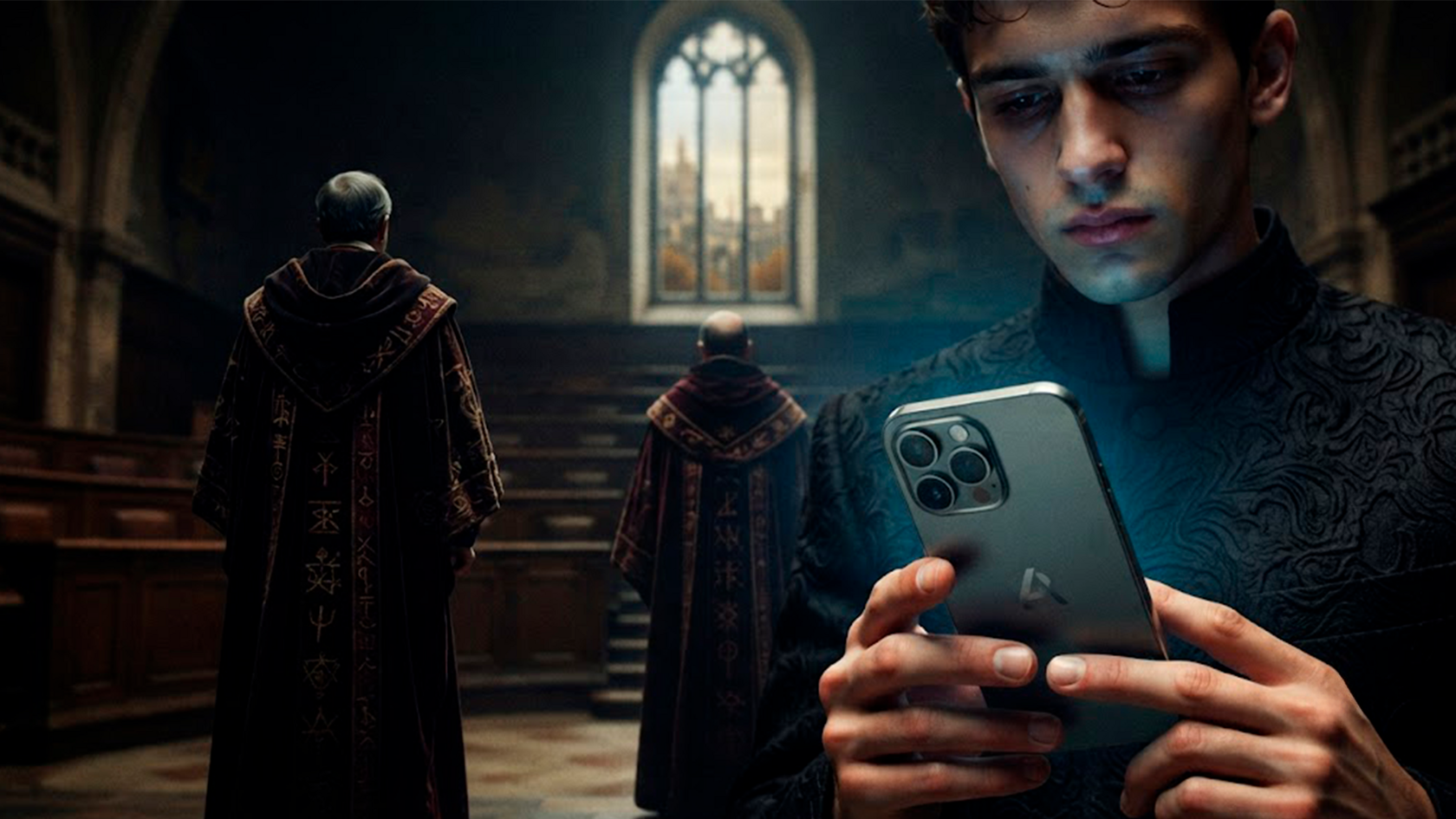
The hall filled two-thirds full — not bad, for an open lecture with no exam at the end of it. In the third row, by the aisle, sat a young man he'd seen only once before: last Thursday, after class, the same young man had come up with a question about caesura — a smart question, a little smarter than the course required. Now he set his phone on his knee, propped against his bag, screen turned toward himself, and before the lecture began he asked whether he could record it.
"That's not how we do things here," he said. "Write it down. The hand remembers what the phone doesn't."
The young man nodded, took his hand off the phone — but didn't turn it off, just laid it flat on his knee, screen up, and didn't touch it again. The screen lit once, briefly, on its own, as if it were breathing.
Before he began, he made his usual joke — the one that, twenty years ago, had never failed to get a laugh out of the freshmen: that Homer, properly considered, was history's first ghostwriter, since the formula wasn't his own invention but tradition's. Two people in the room smiled. He noted it without disappointment — the way one notes the rain outside a window — and began to speak about Homer's fixed epithets.
He spoke of how "swift-footed Achilles" remains swift-footed even sitting motionless in his tent; how "rosy-fingered Dawn" rises rosy-fingered even in those passages where the action takes place at night and no dawn comes at all; how, in oral formula, the epithet is not a description of the hero in this particular moment but a metrical prop, a piece of pre-cut stone fitted into the line as the verse requires, not as the meaning requires. He had said this for perhaps the thirtieth time in his life, and the words came out of him smooth, polished, without a stumble — the way water runs along a channel dug long ago, by someone other than itself.
Somewhere in the middle he heard a pause between two of his own sentences. Not the silence of the hall — the silence of his own voice. It stood where something, it seemed, used to stand. He couldn't remember what.
He finished the paragraph. Glanced above the heads of his listeners — to where, beneath the ceiling, past the unwashed glass of the high window, a bird sat on the ledge. Red, small, of a kind he'd never seen in this city before. It did not fly off and did not move, as if it too had been written into the verse as the line required.
The lecture ended on time, to the minute, as it always did. The students didn't leave at once — they lingered by the door, talking. The young man from the third row stayed at his desk, looking at his phone.
He walked over — not to check on him, just because the path to the door led past. On the screen was text. A full transcript of his lecture, evenly divided into paragraphs, word for word, with names underlined — Homer, Parry, Lord — and beside each one, a link leading further, to the source, to the original, to the very things he himself had once read by flashlight in the library, because the reading room closed before he could finish.
"Thanks," said the young man, without looking up. "Great lecture. It's all in the cloud now."
He looked at the screen a moment longer. The paragraphs were tidier than his own notes. The links more precise than the ones he carried in memory out of habit, unchecked, because he'd last checked them some fifteen years ago.
The hall emptied. He was left alone at the lectern, folder under his arm, the door left ajar, the hum of dispersing footsteps drifting in from the corridor. He took out the watch again. Flipped the lid. Seven fifteen.
The bird on the ledge outside did not fly away.
Room 104 smelled of chalk and the autumn damp that had worked its way in through the swollen window frame. He set his folder of notes on the lectern — the same folder, the same one, its faded blue cover carrying a new year's markings scrawled over the old ones every autumn, until the page had come to resemble a map with too many layers, its topography no longer legible. He ran his palm over the cover. Took the watch from his vest pocket.
The watch had been his father's — its case dulled, the initials on it still faintly legible, though they weren't his own. He flipped the lid open with his thumb — his thumb trembled more in the mornings than he cared to admit — by habit, without looking, and without looking put the watch away again. He knew what time it was from the window, from the hum in the corridor, from the way the students dropped their bags into their seats. The watch couldn't have told him. Its hands had stood at seven fifteen for eleven years now — since the winter he'd forgotten to wind it and decided he never would again. The gesture had stayed. The meaning had left before he'd noticed it going.
The hall filled two-thirds full — not bad, for an open lecture with no exam at the end of it. In the third row, by the aisle, sat a young man he'd seen only once before: last Thursday, after class, the same young man had come up with a question about caesura — a smart question, a little smarter than the course required. Now he set his phone on his knee, propped against his bag, screen turned toward himself, and before the lecture began he asked whether he could record it.
"That's not how we do things here," he said. "Write it down. The hand remembers what the phone doesn't."
The young man nodded, took his hand off the phone — but didn't turn it off, just laid it flat on his knee, screen up, and didn't touch it again. The screen lit once, briefly, on its own, as if it were breathing.
Before he began, he made his usual joke — the one that, twenty years ago, had never failed to get a laugh out of the freshmen: that Homer, properly considered, was history's first ghostwriter, since the formula wasn't his own invention but tradition's. Two people in the room smiled. He noted it without disappointment — the way one notes the rain outside a window — and began to speak about Homer's fixed epithets.
He spoke of how "swift-footed Achilles" remains swift-footed even sitting motionless in his tent; how "rosy-fingered Dawn" rises rosy-fingered even in those passages where the action takes place at night and no dawn comes at all; how, in oral formula, the epithet is not a description of the hero in this particular moment but a metrical prop, a piece of pre-cut stone fitted into the line as the verse requires, not as the meaning requires. He had said this for perhaps the thirtieth time in his life, and the words came out of him smooth, polished, without a stumble — the way water runs along a channel dug long ago, by someone other than itself.
Somewhere in the middle he heard a pause between two of his own sentences. Not the silence of the hall — the silence of his own voice. It stood where something, it seemed, used to stand. He couldn't remember what.
He finished the paragraph. Glanced above the heads of his listeners — to where, beneath the ceiling, past the unwashed glass of the high window, a bird sat on the ledge. Red, small, of a kind he'd never seen in this city before. It did not fly off and did not move, as if it too had been written into the verse as the line required.
The lecture ended on time, to the minute, as it always did. The students didn't leave at once — they lingered by the door, talking. The young man from the third row stayed at his desk, looking at his phone.
He walked over — not to check on him, just because the path to the door led past. On the screen was text. A full transcript of his lecture, evenly divided into paragraphs, word for word, with names underlined — Homer, Parry, Lord — and beside each one, a link leading further, to the source, to the original, to the very things he himself had once read by flashlight in the library, because the reading room closed before he could finish.
"Thanks," said the young man, without looking up. "Great lecture. It's all in the cloud now."
He looked at the screen a moment longer. The paragraphs were tidier than his own notes. The links more precise than the ones he carried in memory out of habit, unchecked, because he'd last checked them some fifteen years ago.
The hall emptied. He was left alone at the lectern, folder under his arm, the door left ajar, the hum of dispersing footsteps drifting in from the corridor. He took out the watch again. Flipped the lid. Seven fifteen.
The bird on the ledge outside did not fly away.
Part II. The Adept
He'd recorded the lecture not because he doubted himself, but because he didn't trust paper — paper gets lost, fades, accumulates its own stray notes over ten years, like that blue folder on the lectern. The app transcribed the professor's voice in real time, no lag, scrubbing filler words, breaking paragraphs wherever the thought turned a corner, and he watched the screen with half an eye, the other half on the professor himself, because last Thursday, at office hours about caesura, the man had struck him as someone worth watching for more than the grade.
For the first fifteen minutes he noticed nothing he didn't already know: the professor spoke precisely, without checking his notes, as if the text of the lecture had long ago migrated from the paper into the body. He had a habit, on difficult names, of tilting his head slightly to one side — as if listening to something inside his own ear. Once, that had probably looked like concentration. Today it looked like nothing more than a gesture left over from concentration.
Then he noticed a pause — not a logical one, not a rhetorical one, just a gap, half a second long, in a place where there shouldn't have been a gap. The professor said "Parry showed" and stopped, as if he'd forgotten for an instant who Parry was, though he'd probably said the name a thousand times.
He glanced at the watch on his own wrist — seven twelve — not because the time mattered, but because his eyes, having left the professor's face, needed somewhere to land before returning. And that was when he saw, at the edge of the lectern, beside the folder, an old pocket watch — apparently fallen from the professor's vest pocket when he'd bent for the chalk. The lid was open. The hands had stopped.
He didn't think anything of it then. He thought something of it later, when the pause repeated — a second time, then a third, each time before a name the professor clearly knew by heart.
He scrolled through the links loading in the app — a Parry paper from the thirties, an English commentary on the Iliad, a dissertation he'd never heard of — and understood that in another minute he'd know more about fixed epithets than the professor had managed to say in the whole hour. Not because he was smarter. Because beside him lay a source with no mediator.
Something felt wrong — not from superiority: the links only added up to a list, not to understanding. The unease came from somewhere else — from the way the professor looked, finishing a paragraph, not at the hall and not at his notes, but at a point somewhere above their heads, into the empty space beneath the ceiling, as if the only listener worth continuing for was there, and not here.
He remembered the office hours about caesura. Back then the professor had spoken more slowly, less fluently, had stopped more often — but in that silence you could clearly hear a thought moving, searching for its shape, stumbling over its own novelty. Now there were more pauses, and no thought in them at all. The pause was technical. Where effort used to stand, now stood nothing.
He looked again at the watch lying on the lectern. The lid was worn shiny where the same finger had touched it, year after year. The hands hadn't moved — couldn't have; their time had run out long ago, and the professor, judging by how calmly he'd returned it to his pocket — without bending, without a glance — had known it for a while.
He could have said, out loud: "I've got the same thing on my phone, just more accurate." The words had already formed somewhere in his throat. He didn't say them.
Instead he closed the tab with the dissertation he wasn't going to finish reading today anyway, and started listening to the voice — not the words, the voice — trying to work out the moment it had stopped being an instrument of thought and become an instrument of habit. He couldn't find that moment. There probably hadn't been one — just a slow rust, accumulating for years in the place where effort used to be.
The lecture ended. He went up to thank him — sincerely, because the transcript really had come out well — and while saying "thank you" he tried not to look the professor in the eye, because he didn't yet know what he'd find there: irritation, indifference, or the same emptiness he'd heard in the pauses. The professor leaned toward the screen a second longer than a simple "thank you" required, and in that second there was something he couldn't read.
Already in the corridor, he thought that he could become the same way himself, one day — precise, polished, flawless — and one day forget to wind his own watch without ever noticing, over the whole life of his own lectures. The thought felt too old for a Thursday, and he set it aside the way one sets aside a book in the middle of a chapter, knowing he'll come back to it.
For the first fifteen minutes he noticed nothing he didn't already know: the professor spoke precisely, without checking his notes, as if the text of the lecture had long ago migrated from the paper into the body. He had a habit, on difficult names, of tilting his head slightly to one side — as if listening to something inside his own ear. Once, that had probably looked like concentration. Today it looked like nothing more than a gesture left over from concentration.
Then he noticed a pause — not a logical one, not a rhetorical one, just a gap, half a second long, in a place where there shouldn't have been a gap. The professor said "Parry showed" and stopped, as if he'd forgotten for an instant who Parry was, though he'd probably said the name a thousand times.
He glanced at the watch on his own wrist — seven twelve — not because the time mattered, but because his eyes, having left the professor's face, needed somewhere to land before returning. And that was when he saw, at the edge of the lectern, beside the folder, an old pocket watch — apparently fallen from the professor's vest pocket when he'd bent for the chalk. The lid was open. The hands had stopped.
He didn't think anything of it then. He thought something of it later, when the pause repeated — a second time, then a third, each time before a name the professor clearly knew by heart.
He scrolled through the links loading in the app — a Parry paper from the thirties, an English commentary on the Iliad, a dissertation he'd never heard of — and understood that in another minute he'd know more about fixed epithets than the professor had managed to say in the whole hour. Not because he was smarter. Because beside him lay a source with no mediator.
Something felt wrong — not from superiority: the links only added up to a list, not to understanding. The unease came from somewhere else — from the way the professor looked, finishing a paragraph, not at the hall and not at his notes, but at a point somewhere above their heads, into the empty space beneath the ceiling, as if the only listener worth continuing for was there, and not here.
He remembered the office hours about caesura. Back then the professor had spoken more slowly, less fluently, had stopped more often — but in that silence you could clearly hear a thought moving, searching for its shape, stumbling over its own novelty. Now there were more pauses, and no thought in them at all. The pause was technical. Where effort used to stand, now stood nothing.
He looked again at the watch lying on the lectern. The lid was worn shiny where the same finger had touched it, year after year. The hands hadn't moved — couldn't have; their time had run out long ago, and the professor, judging by how calmly he'd returned it to his pocket — without bending, without a glance — had known it for a while.
He could have said, out loud: "I've got the same thing on my phone, just more accurate." The words had already formed somewhere in his throat. He didn't say them.
Instead he closed the tab with the dissertation he wasn't going to finish reading today anyway, and started listening to the voice — not the words, the voice — trying to work out the moment it had stopped being an instrument of thought and become an instrument of habit. He couldn't find that moment. There probably hadn't been one — just a slow rust, accumulating for years in the place where effort used to be.
The lecture ended. He went up to thank him — sincerely, because the transcript really had come out well — and while saying "thank you" he tried not to look the professor in the eye, because he didn't yet know what he'd find there: irritation, indifference, or the same emptiness he'd heard in the pauses. The professor leaned toward the screen a second longer than a simple "thank you" required, and in that second there was something he couldn't read.
Already in the corridor, he thought that he could become the same way himself, one day — precise, polished, flawless — and one day forget to wind his own watch without ever noticing, over the whole life of his own lectures. The thought felt too old for a Thursday, and he set it aside the way one sets aside a book in the middle of a chapter, knowing he'll come back to it.
Part III. The Petitioner
He walked into room 104 fifteen minutes after it had started, because the door turned out to be unlocked, and the corridor was quieter than the waiting room he'd left two hours earlier. The title of the lecture, on a sheet by the door — "Homer's Fixed Epithets" — told him nothing. He sat in the last row, by the window, so he could leave if it became unbearable to sit among strangers listening to something that wasn't his.
He didn't understand most of what the professor said. The names — Parry, Lord, Achilles — passed through him without catching, the way a station name passes by when you're not getting off there. He wasn't trying to understand. He was listening to the sound.
The professor's voice ran even, unforced, broken into sentences all the same length, like waves coming ashore at a steady interval — and in that evenness was the one thing he'd been missing for the last two hours: interval. Something repeating at regular distances, and the repetition itself turned out to be a kind of support, regardless of what exactly was being repeated.
He glanced at the young man two rows ahead — the one with the phone on his knee, eyes fixed on the screen — and the Petitioner thought this must be boring for him, since he wasn't listening, only reading his own thing. He himself wasn't bored. He was calm — for the first time all morning.
The professor was saying that Dawn remains rosy-fingered even where no dawn rises. The Petitioner didn't grasp the meaning of the phrase, but it lodged in him as sound, as rhythm — the way "rosy-fingered" sags on its second syllable and pulls itself taut again on the third. He thought of his mother, of something that had nothing to do with Homer and never would — and didn't follow the thought to its end, just let it walk alongside the voice, without getting in its way.
Near the end, the professor fell silent a second longer than usual. The Petitioner raised his head. The professor wasn't looking at the hall but at some point above the last row — perhaps straight at him, perhaps through him, at the wall, at the window, at something that wasn't in the room. The Petitioner turned to see what the professor was looking at, and saw, on the ledge outside, a bird — red, motionless, as if painted onto the glass.
The professor finished his last sentence. Took the watch from his pocket, put it away again with the same unthinking motion, without looking. On the large clock above the board, the one that showed the actual time, the hands met at seven fifteen.
The students began to rise, zip up their bags, talk among themselves. The young man with the phone stayed seated, still looking at the screen. The professor stood at the lectern, putting nothing away, looking at the same point above the empty rows.
The Petitioner didn't get up right away. It didn't matter to him whether the professor was right or wrong, needed by someone or by no one at all. All that remained in his ears was the voice, moving at its even intervals — the one thing, today, that had asked nothing of him in return.
The bird on the ledge took off — for no reason, without warning, simply lifted and went out into the grey morning sky beyond the window.
The Petitioner rose and left with the others, without a word of thanks, without a single question, carrying away not knowledge but rhythm — the little that can be carried out of someone else's lecture hall, when you come there not looking for an answer.
The professor stayed behind, alone. He closed the folder without glancing at his notes, tucked it under his arm — and, already at the door, turned back: not to the board, not to the window, but to where the hall had been sitting a moment ago. No one. He stood like that for a second anyway, before turning off the light.
He didn't understand most of what the professor said. The names — Parry, Lord, Achilles — passed through him without catching, the way a station name passes by when you're not getting off there. He wasn't trying to understand. He was listening to the sound.
The professor's voice ran even, unforced, broken into sentences all the same length, like waves coming ashore at a steady interval — and in that evenness was the one thing he'd been missing for the last two hours: interval. Something repeating at regular distances, and the repetition itself turned out to be a kind of support, regardless of what exactly was being repeated.
He glanced at the young man two rows ahead — the one with the phone on his knee, eyes fixed on the screen — and the Petitioner thought this must be boring for him, since he wasn't listening, only reading his own thing. He himself wasn't bored. He was calm — for the first time all morning.
The professor was saying that Dawn remains rosy-fingered even where no dawn rises. The Petitioner didn't grasp the meaning of the phrase, but it lodged in him as sound, as rhythm — the way "rosy-fingered" sags on its second syllable and pulls itself taut again on the third. He thought of his mother, of something that had nothing to do with Homer and never would — and didn't follow the thought to its end, just let it walk alongside the voice, without getting in its way.
Near the end, the professor fell silent a second longer than usual. The Petitioner raised his head. The professor wasn't looking at the hall but at some point above the last row — perhaps straight at him, perhaps through him, at the wall, at the window, at something that wasn't in the room. The Petitioner turned to see what the professor was looking at, and saw, on the ledge outside, a bird — red, motionless, as if painted onto the glass.
The professor finished his last sentence. Took the watch from his pocket, put it away again with the same unthinking motion, without looking. On the large clock above the board, the one that showed the actual time, the hands met at seven fifteen.
The students began to rise, zip up their bags, talk among themselves. The young man with the phone stayed seated, still looking at the screen. The professor stood at the lectern, putting nothing away, looking at the same point above the empty rows.
The Petitioner didn't get up right away. It didn't matter to him whether the professor was right or wrong, needed by someone or by no one at all. All that remained in his ears was the voice, moving at its even intervals — the one thing, today, that had asked nothing of him in return.
The bird on the ledge took off — for no reason, without warning, simply lifted and went out into the grey morning sky beyond the window.
The Petitioner rose and left with the others, without a word of thanks, without a single question, carrying away not knowledge but rhythm — the little that can be carried out of someone else's lecture hall, when you come there not looking for an answer.
The professor stayed behind, alone. He closed the folder without glancing at his notes, tucked it under his arm — and, already at the door, turned back: not to the board, not to the window, but to where the hall had been sitting a moment ago. No one. He stood like that for a second anyway, before turning off the light.

Literary Passport:
- Literary project: INCUBATOR™
- Cycle: II. “The Fool's Journey”
- Novella: V. THE HIEROPHANT
- Author: Iskandar Kadyrov
- Genre: intellectual drama / philosophical parable / psychological prose
- Age rating: 18+
- Arcana: V — The Hierophant (interpreter of tradition, mediator between knowledge and those it is passed to)
- Fear: of hollow mediation
- Fear formula: "I still speak the words people believe. I no longer believe them myself — and the world has just learned to do without my voice entirely."
About the literary project:
INCUBATOR™ is a cycle of philosophical novellas by Iskandar Kadyrov, at the intersection of literary fiction, psychological drama, social satire and dystopian literature.
Next in the cycle
VI. THE LOVERS
They chose each other for twenty-three years. And then they had to choose themselves.
VI. THE LOVERS
They chose each other for twenty-three years. And then they had to choose themselves.