Count Saint-Germain: The Man Behind the Door
Literary Passport:
Announcement
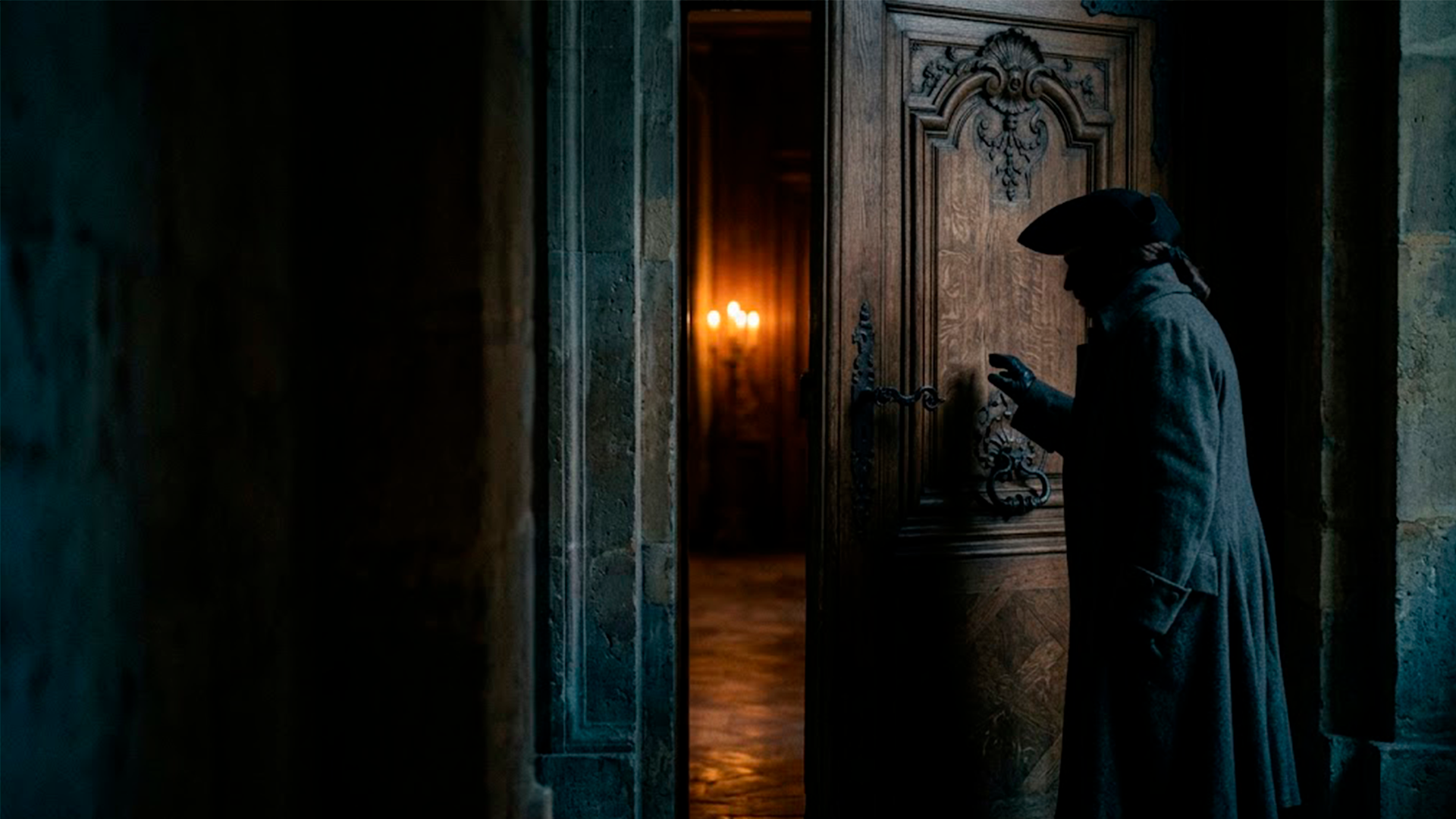
He does not know the future, only its probabilities—and therefore never decides for others. Until one day he stands before a door he could open, but has no right to open.
Hashtags
#HistoricalFantasy #MagicalRealism #PhilosophicalFiction #CountSaintGermain #Incubator
About the Literary Project
THE INCUBATOR™ is a cycle of philosophical novellas by Iskandar Kadyrov at the intersection of intellectual prose, psychological drama, social satire, and dystopian literature.
- Literary Project: INCUBATOR™
- Cycle: I. "The Threshold"
- Author: Iskandar Kadyrov
- Age Rating: 18+
- Novella: "Count Saint-Germain: The Man Behind the Door"
- Genre: Historical fantasy · Magical realism · Philosophical parable
- Slogan: Every door he did not open is the only proof that he is still human.
Announcement
He does not know the future, only its probabilities—and therefore never decides for others. Until one day he stands before a door he could open, but has no right to open.
Hashtags
#HistoricalFantasy #MagicalRealism #PhilosophicalFiction #CountSaintGermain #Incubator
About the Literary Project
THE INCUBATOR™ is a cycle of philosophical novellas by Iskandar Kadyrov at the intersection of intellectual prose, psychological drama, social satire, and dystopian literature.
I. The Door in the Winter Palace
The knock came a quarter of an hour before she was meant to be alone.
Catherine did not startle. In this house she had long since stopped startling at sounds: any one of them could mean the end. She opened the door herself, dismissing her lady-in-waiting with a glance. The room smelled of candle wax and damp fur — the coat by the door had never quite dried since evening. In the doorway, dark as the underside of a mirror, stood a man in a grey coat without crests or braid — so unremarkable one could pass him twice and never remember his face. At court people whispered various things about him: that he appeared wherever something important was about to be decided within hours, and almost never where it had already been decided. No one could say how he knew his hour.
"It seems I've come a little early," he said in French, with an accent that belonged to no known province.
"Early for what?"
"For the hour when you'll decide the decision has already been made. I thought it might serve you better to speak with me before that, rather than after."
She let him in — not because she trusted him, but because there was nothing in his voice worth weighing and fearing. He sat without being invited, though not in the chair, but on the low stool by the window — as though he'd known his place beforehand.
The conversation lasted the better part of an hour. He did not tell her what to do. He asked what she feared more — losing her life, or living someone else's to the end.
"Why don't you simply tell me what to do?" she asked at last. "Since you clearly know more than I do."
"Because then it would be my decision, not yours," he answered.
"One officer will receive a letter today," he said, and stopped himself.
"Or has already received it. Or will receive it tomorrow. That's not the important part. What matters is that it doesn't reach where it might have."
She caught the hesitation. Before her was not a man reading the future like an open book, but a man deciphering a poorly printed page, where the lines blurred and doubled.
"You're not certain," she said.
"I'm certain of the direction," he answered. "Rarely of the particulars."
When he rose to leave, she noticed in his hand a small notebook in worn morocco leather — cramped handwriting tangled with sketches, not quite notes, not quite recipes.
"What is that?" she asked.
"A cookbook," he said, quite seriously. "I collect recipes. Sometimes they're the only thing left of an age when everything else has been forgotten."
At the door he turned back.
"You will make the decision yourself, Your Majesty. I only came a little earlier than necessary — so there would be a little less draft at the door you're about to walk through."
The door closed. No one knocked again that night.
The next morning he wrote in the book, between a recipe for almond cream and a note on the properties of mercury, a single line: "White sauce for cold meat. Serve before it goes cold entirely." He set no date — the dates in this book rarely matched the calendar of the world.
II. Supper at Versailles
At Louis's table, he barely ate.
Everyone noticed, but no one asked outright — he explained his lack of appetite too easily, first as a fast observed in some Eastern tradition, then as an alchemist's diet. Before him sat a plate with an untouched pheasant; the sauce was congealing, and the courtiers glanced at it sideways, the way one glances at a clock about to stop.
The courtiers laughed — politely, furtively — and drew toward him the way one draws toward a mirror in which one hopes to see not one's own face, but someone's approval.
The King listened to him longer than etiquette required.
"You claim, Count, to have known my great-grandfather's court."
"I claim little, Your Majesty. I simply remember more than one man is meant to remember."
"And what do you see now? Looking at us?"
Saint-Germain was silent a moment, turning in his fingers a glass he had not touched all evening.
"A house that hasn't yet decided whether to light more candles or put out half of them. Both are reasonable. Both decisions are equally sincere. The difference only shows itself afterward."
Louis laughed — the laugh of a man who understands he's been warned, but prefers to take it as wit. After supper, when the hall had emptied, the King kept him at the window.
"What do you want from us, Count? You don't need money — you refused a pension. You ask for no title. What do you want from France?"
"You don't need France," Saint-Germain said slowly, as though tasting the phrase, and caught himself. "Forgive me, Your Majesty. I shouldn't have said that."
The words had come out before he could hold them back: for a moment, fatigue had outrun discipline.
Louis looked at him with curiosity — the way one looks not at a subject, but at a man who has just told the truth in a form kings are not usually given it.
"At last, someone who told me that without asking for a pension."
"Finish the thought, Count. You've started it."
"Not every sentence deserves finishing, Your Majesty. Sometimes what's begun is more honest than what's completed."
But something in his face — a weariness at the corners of his eyes, a pause before the next word that lingered a second longer than usual — stayed with the King longer than the sentence itself.
That same night, a new entry appeared in the recipe book, beside a sketch of some distillation apparatus: "Cream for game. Prepare in advance — or there won't be time to serve it while the guests are still hungry."
III. The Book
To those who saw the Count's book, it looked like an alchemist's whim — a collection of recipes tangled with formulas, sketches of constellations, fragments of verse in languages no one at court could place. Few lingered on it more than a minute: too homely, too small, too unbecoming of a count. The leather binding was worn smooth at the corners, like a cookbook handled by wet hands. Its pages smelled of nutmeg and old wood.
He wrote in it nearly every evening — not the way one keeps a diary, recording events, but the way one writes a score, recording what has yet to sound. "A sauce that curdles if rushed" appeared in it the year Paris began looking away from empty granaries. "A pie that holds its shape only cold" — the year one family at court stopped being invited to the table.
But once, between two entries carefully encoded as culinary metaphors, a line appeared unlike the others. No recipe. No image. Written in haste, as though the hand had outrun the decision to write it at all:
"I've forgotten the name of the woman I promised never to forget."
He didn't cross the line out. It stood there in the middle of the book, a gap in the system — the one place where the book stopped being an instrument and became a diary: an attempt to hold on to what was already slipping through his fingers.
Once, toward the end of a Versailles night, a violinist found the Count alone in the gallery. He held someone else's instrument, left forgotten on a bench, and drew the bow across it so that the music didn't sound like a melody, but rather steadied the breathing of those who heard it from beyond the wall.
"You play, Count?"
The bow stopped mid-air. The silence was such that the violinist heard wax settling on the candles.
"I'm tuning," he answered, without turning. "Sometimes people need to hear the right note before they make a decision. A false note doesn't distort the sound — it distorts the choice."
The violinist didn't understand, but he remembered the line — the way one remembers a sentence whose meaning will reveal itself later, once it's too late to ask what it meant.
IV. The Door He Did Not Open
In the autumn of ninety-three, the door was neither carved nor crested — scarred, a prison door, with a spyhole through which the damp of the Conciergerie seeped. An icy draft crept from beneath the door, mixed with the smell of rotting straw. Somewhere water dripped, not in rhythm but in fits and starts, like a breath that couldn't steady itself.
He stood before it longer than he had ever stood before any other door in his long life.
Inside, on a narrow cot, sat a woman who, half a year ago, had still been called a queen, and was now called simply by her cell number. She didn't lift her head at once — jailers rarely came quietly, and this man knew how to enter so that the air in the room changed before the sound did.
"I know you," she said. "You visited my mother-in-law when I was still a girl in Austria. You haven't aged a day."
"Some things age faster than people," he answered. "States. Trust. Ideas about who owns what, and by what right."
She didn't ask outright — pride wouldn't let her beg mercy even from the one man who might grant it. But something in her look asked the question without words, and he answered it as though she'd spoken aloud.
He walked to the door and let his fingers rest against the lock for a moment. Then he drew his hand back and, instead of a key, took from his pocket the notebook in worn morocco leather, as though it were what he needed now.
"I could. This cell's door is not the last of those I know how to open without a key. I could give you a servant's dress and three hours of darkness, and by dawn, in all likelihood, you'd be well past the city gate."
"Then why are you standing here telling me this, instead of doing it?"
"Because after that, it wouldn't be your life that continued, but someone else's story — one in which not one woman would perish, but thousands of people whose names no one will ever know. I have no right to trade a thousand unknown fates for one known one. Not even yours."
He wanted to add something more, but didn't. And she noticed.
"You didn't finish, Count."
"No," he admitted. "Sometimes I don't know where my certainty ends and my cowardice begins."
The word cowardice hung in the cell heavier than anything he'd said before it.
She was silent for a long time. The candle behind the bars dripped wax onto the stone more slowly than the seconds passed.
"That's cruel, Count."
"It's the only thing I have left in place of cruelty — to tell you the truth. Others simply vanish, leaving you to guess. I decided you deserved to know the price."
"Do you know what they hate me for?" she said suddenly. "For being too happy, at too wrong a time. Is that a crime too?"
"In history — yes," he answered. "Especially when the happiness is badly tailored."
She smiled — briefly, almost girlishly, through everything she'd lived in these last months.
"They say I once said something about bread that I never actually said. People put words in my mouth I never spoke, so it's easier for them to hate me. Perhaps you, too, will one day be remembered as someone you never were."
"Probably," he agreed. "Memory is rarely a fair creditor."
He left before they came for her again. That night, a final entry appeared in the book beside an old recipe: "Pastries for the queen. Do not serve too late" — no explanation, no date, only that line, which he never read aloud again.
V. The Road
After the square, where the crowd was dispersing slowly, as though not quite believing the spectacle was over, he walked on foot — for the first time in decades, without choosing a direction in advance. Behind him a few last shouts still carried, but they were already drowning in the sound of rain, which had begun all at once, as though the sky had grown tired of waiting.
Ahead, the road split into two branches. In the past, probabilities had always come to him unbidden, like insistent guests — jostling, arguing, pointing the way, talking over one another. Now there was silence.
He waited. Silent. Truly silent, for the first time.
He stood at the fork and could not tell which of the two roads led to the next Threshold, and which led to a dead end. Perhaps both led nowhere. Perhaps both led to the same place.
He sat down on a stone by the roadside. Not because he was tired — fatigue had long since stopped being, for him, a matter of the body. The need to decide at once where to go simply did not come.
He opened the book one last time that evening, reread the line about the pastries not to be served too late, and added nothing new. Then he took out the violin — the one that was not his, still unclaimed by its previous owner — and played a few notes meant for no one, simply to test whether anything still sounded in him besides the calculus of probability.
The Flying Dutchman, he recalled once hearing the legend, was doomed forever to approach a shore he would never see. He thought the legend was inexact: the point wasn't that the shore was unreachable. The point was that, one day, the ship forgot why it needed a shore at all.
He smiled — just at the corners of his mouth, with no one watching. The Flying Dutchman, at least, knew he was cursed. He himself still wasn't sure there had ever been a choice at all.
He did not rise, and did not take either branch of the road — not out of a wisdom that lets the world go its own way, but out of honesty before a sudden blindness he had nothing in his memory to compare to.
He remained sitting until it was fully dark — the first time, in a life whose length defied counting, that he let the road go on without him.
The door behind which the continuation of his own service waited stayed closed that night. No one knows whether he shut it himself, or simply stopped listening for its knock.
The knock came a quarter of an hour before she was meant to be alone.
Catherine did not startle. In this house she had long since stopped startling at sounds: any one of them could mean the end. She opened the door herself, dismissing her lady-in-waiting with a glance. The room smelled of candle wax and damp fur — the coat by the door had never quite dried since evening. In the doorway, dark as the underside of a mirror, stood a man in a grey coat without crests or braid — so unremarkable one could pass him twice and never remember his face. At court people whispered various things about him: that he appeared wherever something important was about to be decided within hours, and almost never where it had already been decided. No one could say how he knew his hour.
"It seems I've come a little early," he said in French, with an accent that belonged to no known province.
"Early for what?"
"For the hour when you'll decide the decision has already been made. I thought it might serve you better to speak with me before that, rather than after."
She let him in — not because she trusted him, but because there was nothing in his voice worth weighing and fearing. He sat without being invited, though not in the chair, but on the low stool by the window — as though he'd known his place beforehand.
The conversation lasted the better part of an hour. He did not tell her what to do. He asked what she feared more — losing her life, or living someone else's to the end.
"Why don't you simply tell me what to do?" she asked at last. "Since you clearly know more than I do."
"Because then it would be my decision, not yours," he answered.
"One officer will receive a letter today," he said, and stopped himself.
"Or has already received it. Or will receive it tomorrow. That's not the important part. What matters is that it doesn't reach where it might have."
She caught the hesitation. Before her was not a man reading the future like an open book, but a man deciphering a poorly printed page, where the lines blurred and doubled.
"You're not certain," she said.
"I'm certain of the direction," he answered. "Rarely of the particulars."
When he rose to leave, she noticed in his hand a small notebook in worn morocco leather — cramped handwriting tangled with sketches, not quite notes, not quite recipes.
"What is that?" she asked.
"A cookbook," he said, quite seriously. "I collect recipes. Sometimes they're the only thing left of an age when everything else has been forgotten."
At the door he turned back.
"You will make the decision yourself, Your Majesty. I only came a little earlier than necessary — so there would be a little less draft at the door you're about to walk through."
The door closed. No one knocked again that night.
The next morning he wrote in the book, between a recipe for almond cream and a note on the properties of mercury, a single line: "White sauce for cold meat. Serve before it goes cold entirely." He set no date — the dates in this book rarely matched the calendar of the world.
II. Supper at Versailles
At Louis's table, he barely ate.
Everyone noticed, but no one asked outright — he explained his lack of appetite too easily, first as a fast observed in some Eastern tradition, then as an alchemist's diet. Before him sat a plate with an untouched pheasant; the sauce was congealing, and the courtiers glanced at it sideways, the way one glances at a clock about to stop.
The courtiers laughed — politely, furtively — and drew toward him the way one draws toward a mirror in which one hopes to see not one's own face, but someone's approval.
The King listened to him longer than etiquette required.
"You claim, Count, to have known my great-grandfather's court."
"I claim little, Your Majesty. I simply remember more than one man is meant to remember."
"And what do you see now? Looking at us?"
Saint-Germain was silent a moment, turning in his fingers a glass he had not touched all evening.
"A house that hasn't yet decided whether to light more candles or put out half of them. Both are reasonable. Both decisions are equally sincere. The difference only shows itself afterward."
Louis laughed — the laugh of a man who understands he's been warned, but prefers to take it as wit. After supper, when the hall had emptied, the King kept him at the window.
"What do you want from us, Count? You don't need money — you refused a pension. You ask for no title. What do you want from France?"
"You don't need France," Saint-Germain said slowly, as though tasting the phrase, and caught himself. "Forgive me, Your Majesty. I shouldn't have said that."
The words had come out before he could hold them back: for a moment, fatigue had outrun discipline.
Louis looked at him with curiosity — the way one looks not at a subject, but at a man who has just told the truth in a form kings are not usually given it.
"At last, someone who told me that without asking for a pension."
"Finish the thought, Count. You've started it."
"Not every sentence deserves finishing, Your Majesty. Sometimes what's begun is more honest than what's completed."
But something in his face — a weariness at the corners of his eyes, a pause before the next word that lingered a second longer than usual — stayed with the King longer than the sentence itself.
That same night, a new entry appeared in the recipe book, beside a sketch of some distillation apparatus: "Cream for game. Prepare in advance — or there won't be time to serve it while the guests are still hungry."
III. The Book
To those who saw the Count's book, it looked like an alchemist's whim — a collection of recipes tangled with formulas, sketches of constellations, fragments of verse in languages no one at court could place. Few lingered on it more than a minute: too homely, too small, too unbecoming of a count. The leather binding was worn smooth at the corners, like a cookbook handled by wet hands. Its pages smelled of nutmeg and old wood.
He wrote in it nearly every evening — not the way one keeps a diary, recording events, but the way one writes a score, recording what has yet to sound. "A sauce that curdles if rushed" appeared in it the year Paris began looking away from empty granaries. "A pie that holds its shape only cold" — the year one family at court stopped being invited to the table.
But once, between two entries carefully encoded as culinary metaphors, a line appeared unlike the others. No recipe. No image. Written in haste, as though the hand had outrun the decision to write it at all:
"I've forgotten the name of the woman I promised never to forget."
He didn't cross the line out. It stood there in the middle of the book, a gap in the system — the one place where the book stopped being an instrument and became a diary: an attempt to hold on to what was already slipping through his fingers.
Once, toward the end of a Versailles night, a violinist found the Count alone in the gallery. He held someone else's instrument, left forgotten on a bench, and drew the bow across it so that the music didn't sound like a melody, but rather steadied the breathing of those who heard it from beyond the wall.
"You play, Count?"
The bow stopped mid-air. The silence was such that the violinist heard wax settling on the candles.
"I'm tuning," he answered, without turning. "Sometimes people need to hear the right note before they make a decision. A false note doesn't distort the sound — it distorts the choice."
The violinist didn't understand, but he remembered the line — the way one remembers a sentence whose meaning will reveal itself later, once it's too late to ask what it meant.
IV. The Door He Did Not Open
In the autumn of ninety-three, the door was neither carved nor crested — scarred, a prison door, with a spyhole through which the damp of the Conciergerie seeped. An icy draft crept from beneath the door, mixed with the smell of rotting straw. Somewhere water dripped, not in rhythm but in fits and starts, like a breath that couldn't steady itself.
He stood before it longer than he had ever stood before any other door in his long life.
Inside, on a narrow cot, sat a woman who, half a year ago, had still been called a queen, and was now called simply by her cell number. She didn't lift her head at once — jailers rarely came quietly, and this man knew how to enter so that the air in the room changed before the sound did.
"I know you," she said. "You visited my mother-in-law when I was still a girl in Austria. You haven't aged a day."
"Some things age faster than people," he answered. "States. Trust. Ideas about who owns what, and by what right."
She didn't ask outright — pride wouldn't let her beg mercy even from the one man who might grant it. But something in her look asked the question without words, and he answered it as though she'd spoken aloud.
He walked to the door and let his fingers rest against the lock for a moment. Then he drew his hand back and, instead of a key, took from his pocket the notebook in worn morocco leather, as though it were what he needed now.
"I could. This cell's door is not the last of those I know how to open without a key. I could give you a servant's dress and three hours of darkness, and by dawn, in all likelihood, you'd be well past the city gate."
"Then why are you standing here telling me this, instead of doing it?"
"Because after that, it wouldn't be your life that continued, but someone else's story — one in which not one woman would perish, but thousands of people whose names no one will ever know. I have no right to trade a thousand unknown fates for one known one. Not even yours."
He wanted to add something more, but didn't. And she noticed.
"You didn't finish, Count."
"No," he admitted. "Sometimes I don't know where my certainty ends and my cowardice begins."
The word cowardice hung in the cell heavier than anything he'd said before it.
She was silent for a long time. The candle behind the bars dripped wax onto the stone more slowly than the seconds passed.
"That's cruel, Count."
"It's the only thing I have left in place of cruelty — to tell you the truth. Others simply vanish, leaving you to guess. I decided you deserved to know the price."
"Do you know what they hate me for?" she said suddenly. "For being too happy, at too wrong a time. Is that a crime too?"
"In history — yes," he answered. "Especially when the happiness is badly tailored."
She smiled — briefly, almost girlishly, through everything she'd lived in these last months.
"They say I once said something about bread that I never actually said. People put words in my mouth I never spoke, so it's easier for them to hate me. Perhaps you, too, will one day be remembered as someone you never were."
"Probably," he agreed. "Memory is rarely a fair creditor."
He left before they came for her again. That night, a final entry appeared in the book beside an old recipe: "Pastries for the queen. Do not serve too late" — no explanation, no date, only that line, which he never read aloud again.
V. The Road
After the square, where the crowd was dispersing slowly, as though not quite believing the spectacle was over, he walked on foot — for the first time in decades, without choosing a direction in advance. Behind him a few last shouts still carried, but they were already drowning in the sound of rain, which had begun all at once, as though the sky had grown tired of waiting.
Ahead, the road split into two branches. In the past, probabilities had always come to him unbidden, like insistent guests — jostling, arguing, pointing the way, talking over one another. Now there was silence.
He waited. Silent. Truly silent, for the first time.
He stood at the fork and could not tell which of the two roads led to the next Threshold, and which led to a dead end. Perhaps both led nowhere. Perhaps both led to the same place.
He sat down on a stone by the roadside. Not because he was tired — fatigue had long since stopped being, for him, a matter of the body. The need to decide at once where to go simply did not come.
He opened the book one last time that evening, reread the line about the pastries not to be served too late, and added nothing new. Then he took out the violin — the one that was not his, still unclaimed by its previous owner — and played a few notes meant for no one, simply to test whether anything still sounded in him besides the calculus of probability.
The Flying Dutchman, he recalled once hearing the legend, was doomed forever to approach a shore he would never see. He thought the legend was inexact: the point wasn't that the shore was unreachable. The point was that, one day, the ship forgot why it needed a shore at all.
He smiled — just at the corners of his mouth, with no one watching. The Flying Dutchman, at least, knew he was cursed. He himself still wasn't sure there had ever been a choice at all.
He did not rise, and did not take either branch of the road — not out of a wisdom that lets the world go its own way, but out of honesty before a sudden blindness he had nothing in his memory to compare to.
He remained sitting until it was fully dark — the first time, in a life whose length defied counting, that he let the road go on without him.
The door behind which the continuation of his own service waited stayed closed that night. No one knows whether he shut it himself, or simply stopped listening for its knock.
About Novell
Count Saint-Germain is one of the most enigmatic figures of the eighteenth century: an alchemist, polyglot, courtier without a documented birth or death. "The Man Behind the Door," from the Threshold cycle, is an original literary interpretation of that legend — not a historical reconstruction. Real figures of the era — Catherine the Great, Louis XV, Marie Antoinette, the French Revolution — become the dramatic ground for a philosophical parable about the price of knowing the future.
At the novella's center is not a mystery thriller or the biography of an immortal sage, but the story of a man who sees not a fixed future, but its branching probabilities — and who, again and again, must choose whether to step into someone else's fate or leave the door closed. The story continues the central theme of the Threshold cycle: tales that begin where common sense ends.
Count Saint-Germain is one of the most enigmatic figures of the eighteenth century: an alchemist, polyglot, courtier without a documented birth or death. "The Man Behind the Door," from the Threshold cycle, is an original literary interpretation of that legend — not a historical reconstruction. Real figures of the era — Catherine the Great, Louis XV, Marie Antoinette, the French Revolution — become the dramatic ground for a philosophical parable about the price of knowing the future.
At the novella's center is not a mystery thriller or the biography of an immortal sage, but the story of a man who sees not a fixed future, but its branching probabilities — and who, again and again, must choose whether to step into someone else's fate or leave the door closed. The story continues the central theme of the Threshold cycle: tales that begin where common sense ends.
2026 © Iskandar Kadyrov • All rights reserved • RU / EN (18+)
See also