You learn the price of a dream only after it comes true.
The higher you climb, the quieter it gets inside.
Every story begins before birth…
PROLOGUE — "Cannonade"
Thirty seconds.
I know it precisely — not by a clock, but by the sound. The hall is no longer just noisy. It is breathing. A single lung, shared by several thousand people. I stand in the darkness backstage and listen as that lung draws in air before its final, loudest exhale.
Thirty seconds.
I take out the photograph.
I don't know when this became a habit. Maybe eight years ago — or ten. At some point, I simply started taking it out before every entrance. Look at it. Put it away. My hand finds the breast pocket on its own, my fingers search out the old cardboard with its slightly bent corner.
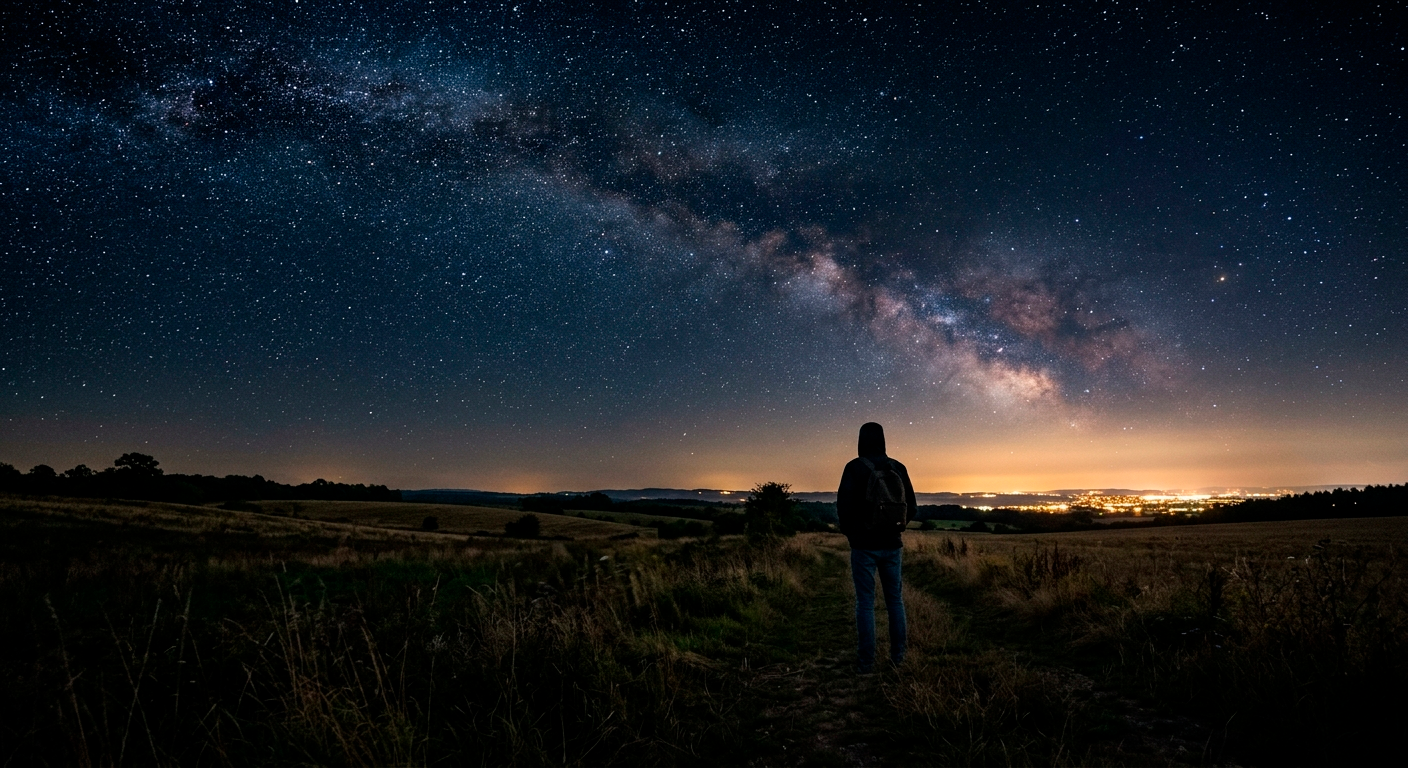
In the picture, a boy stands in a field. Outside the city. The sky above him is so vast that the boy himself is barely visible. Thin. Standing straight, staring into the lens. Not smiling. Just staring.
I put the photograph away.
Twenty seconds.
The hall begins to chant my name.
Not shouting — precisely chanting. Rhythmic, synchronized. The sound rises in waves, crashes against the wings, reaches me — hot, dense, almost tangible.
I hear my name.
The sound is there. The meaning is not.
It didn't start today. I first noticed it long ago, after one of the early big concerts. I stood just like this, listening to the hall scream my name, and suddenly caught myself thinking: I don't understand who they mean. Someone with my name. An image they invented and fell in love with. I decided it was fatigue. It would pass.
It didn't.
Ten seconds.
The light on stage shifts. Diffuse bluish transitions into harsh white. The spotlights swivel. I know this pattern by heart: the central beam will lock onto the exact spot where I will step out in a few seconds, and when I get there — such light will hit my face that for the first two or three seconds I will see nothing. Only white.
Walking out into blindness. That too has become a habit.
Five seconds.
I take a step.
The light strikes instantly — hot, almost physically heavy, as if it has weight. The hall explodes. Thousands of people rise to their feet — I can hear it in the change of sound, in how the avalanche of applause climbs higher and multiplies. Someone screams. Someone cries — I know because I've seen it later, on the recordings.
I smile.
I was taught this. The entrance smile — wide, genuine, not a duty. Now it comes on its own, before I even have time to think. Muscle memory. A profession.
I stand in the center of the stage, in the very heart of the white light, and smile at the thousands of people screaming my name.
Inside — it's like a room from which all the furniture has been removed. The walls are there. The ceiling is there. The floor is there. But there is nowhere to live.
I stand where I spent my whole life trying to reach. And I don't understand why I came.
The hall does not quiet down. I know — it will last long. Three minutes, maybe five. I will give them a sign. I will go out, play, take a bow. Professionally. Cleanly.
But right now, while the hall is still gathering its full force, I stand and stare into the hot white light — and think about the boy from the field.
About how he knew nothing of this light.
About how he was looking at entirely different stars.
About how I almost don't remember him anymore.
The hall screams my name.
I smile.
The spotlight burns my face.
PART I — "The Provinces"
The city ended at the tram loop.
Beyond it lay a field. Then a strip of woodland. Then — nothing but sky, which always seemed lower here than it should be.
I lived in that city for seventeen years and all that time I felt it: the ceiling — that wasn't a metaphor.
The assembly hall in our school smelled of dust and old wood. The stage — three steps. A red curtain, faded to the color of old brick, with yellow fringe at the bottom. On the right side — a stain. I never knew where it came from. Just a stain.
I remember that stain better than the faces of the people in the audience.
There were three of us on stage. I went on last. I stood backstage and couldn't make myself take the step. Not fear — something else. As if I sensed that after this step something would change, but I couldn't explain what exactly.
I stepped out.
The hall was small. Ten rows, half full. Twenty people. Maybe twenty-five. Teachers, a few parents, classmates — mostly those who had been dragged there.
But they were looking at me.
Twenty pairs of eyes aimed at a single point. And in that moment, something inside clicked, like a circuit breaker. Quietly, without announcement. It just became different.
I sang. Or spoke — I no longer remember what exactly was in that program. That's not what matters. What matters — something was filling up while I stood there and they watched. As if a window had been opened in the room.
When it was over — they clapped. Politely. A few people stood up, but I think they just wanted to leave.
I went backstage.
And immediately felt the window close.
No one waited for me afterwards. I went out through the side door, circled the school, and walked towards the tram loop. Then I turned onto a path and came out into the field.
It was the end of May. The grass was already tall, warm. I stopped and just stood there.
Footsteps sounded behind me — Kolka from a parallel class, with a camera. He went everywhere with it back then, photographing everything in sight. I didn't even turn around — just stood and stared out where the city ended.
He clicked.
"Turned out alright," he said later, when he developed the prints. He gave me the photo. I took it, shoved it into my jacket.
Didn't throw it away.
Not because I treasured it. Just — didn't throw it away. The photo moved to another pocket, then another jacket, then another city. It always ended up somewhere nearby.
That night, I lay on the grass and stared at the sky.
There were many stars — almost no streetlights, so they were clearly visible. I stared and thought about nothing in particular.
I felt good.
Simply — evening, grass, sky.
And I wanted to go there. Not to the stars. Just — to where it was light.
PART II — "Hungry"
The room cost eight thousand a month.
It was cheap even by the standards of the market back then — the window faced the wall of the neighboring building, the heating worked sporadically, and the landlady showed up without warning, looking at me the way you look at a thing you've rented out and are waiting to get back.
I lived there for two years.
For the first six months, it felt temporary. Then it stopped feeling that way.
The city was big. So big that you could disappear inside it — not die, but precisely disappear. Walk the streets, ride the subway, stand in lines — and not exist for anyone.
In the small city, people knew me. Not as someone important — they simply knew me. A neighbor, a classmate, the guy from the building across the street. I existed in someone else's memory.
Here, I meant nothing.
The subway in the morning. A thousand faces — not a single one that would look back. Not hostile. Just past. Through.
The first time I felt it physically: I'm standing on the platform, the train hasn't arrived yet, people around me — and suddenly the sensation that I am not here. Not sadness. Something colder.
As if the window that had opened back then in the assembly hall had closed forever.
I started looking for auditions by the third week. Online ads, word of mouth, once — a flyer on a pole. Recording studios, theater agencies, auditions for corporate events, try-outs for restaurant bands. Once — voiceover for a commercial.
Didn't get any.
At first it seemed like a technical problem. Not enough experience. Need to study more, work more. Then it stopped seeming like a technical problem.
There were auditions where they looked at me for ten seconds and said, "Thank you, we'll call." There were auditions where they didn't look at all — the person at the table shuffled papers and listened without lifting his eyes. Once, they stopped me mid-sentence: "That's enough. Next."
I went outside and stood against the wall for a long time.
I didn't cry. I just stood there. It was cold — December, light snow, wet boots.
Then I went home.
Somewhere around this time, I started taking out the photograph.
Just sometimes — in the evening, after another rejection — I would sit on the bed and take it out of my jacket. Stare at the boy in the field. The sky above him. The grass.
It didn't help. I just stared — and put it back.
Money ran out by the twenty-fifth of each month. The last days, I ate buckwheat. Learned not to think about food between eleven in the morning and seven in the evening.
There was no anger. There was something like a dull, steady pressure. As if something heavy had been placed on my chest — not to crush, just to make breathing slightly harder.
I got used to it.
In the spring of that same year, I happened to find myself at the backstage entrance of one of the concert halls. Just walking past. Stopped to smoke.
A man came out the door. Young, around my age. Behind him — two others with bags. Then the security guard opened the second door, and another man stepped out — and I knew immediately it was him. Not because I recognized the face. By the way the others repositioned themselves — a step back, a step to the side. By the way the space around him changed.
There were a few people standing on the street. When he came out, they were drawn to him — like people are drawn to light.
He said something, signed something, smiled. Then got into a car. The door closed.
I finished my cigarette.
Something inside noted quietly and evenly: it's possible.
I threw away the butt and walked on.
PART III — "The Ascent"
The first time I got a gig, it was an accident.
The guy who was supposed to fill in broke his arm two days before the show. They called me at eight in the morning. The voice on the phone spoke fast: there's a slot, need someone with experience, decent pay, show's the day after tomorrow. I said yes before he finished the sentence.
The venue was small. Not that hall, not that scale — but live sound, live people, and I was standing on a stage again.
The window opened.
This time I managed to catch the moment — right here, right now. The air is different. People are watching. I exist.
After the show, a man about forty-five came up to me. Introduced himself. Said a few words — professional, no fluff. Left a business card.
I called him the next day.
The next few months felt like acceleration. Not triumph — exactly acceleration. Something shifted and started rolling — slowly, but on its own now, without my effort on every inch. One thing led to another. The venues grew slightly larger. The crowds — slightly larger. The calls — slightly more.
I was still eating buckwheat. But not every day anymore.
The fatigue changed — no longer dull, as before, but sharp. Alive. I would lie down and couldn't fall asleep right away — not from anxiety, but from a tension that didn't have time to discharge.
I liked this state. I didn't admit it to myself — but I liked it.
The first time I was recognized on the street was in October.
I was walking from the subway. A woman around thirty, carrying shopping bags, turned around — and I saw something change in her face. She said, "You're..." — and said my name.
I said yes.
She nodded, smiled — and walked on. It all took about ten seconds.
I walked another half a block and stopped.
A prick. Short, sharp, almost physical. Somewhere in the sternum area. Not painful — the opposite.
I remembered that sensation. Not on purpose — it just remembered itself.
In the spring of the following year, I saw my face on a poster.
Small — A3 format, on a stand outside a club entrance. My photo, my name, a date. I was walking past, caught it with the corner of my eye — and stopped.
Stood and stared at myself.
A strange sensation. As if you're looking in a mirror, but the mirror is hanging outside, on the street, and everyone can look into it without you.
I took out the photograph. Placed them side by side — mentally. The boy in the field and the face on the poster.
Two different people.
Put the photograph away. Walked on.
Then came the first "no" that turned into a "yes."
The agency that had turned me down two years before — the very one where the man at the table hadn't lifted his eyes — sent a letter. Polite, with all the right words. They had seen me at a venue, they were interested in talking.
I read the letter three times. Not because I didn't understand. I just read it — and inside, something answered each word quietly and evenly.
This works.
The world began to respond — and it turned out to be nothing like I had imagined. I thought there would be a moment. A point. Some specific "now." Instead — a process without borders. Each "yes" opened the next level, where you had to prove yourself again, keep moving again. The ladder never ended — it just continued higher, and the steps grew wider but no fewer.
Going back already felt strange. Not frightening — precisely strange. As if a road leading back still existed but no longer held any meaning.
Sometimes I would take out the photograph and stare at the boy from the field. Try to remember what it felt like to stand like that. Just stand. Without the next step.
I almost succeeded.
PART IV — "The Brass"
I don't remember when exactly it changed.
There was no moment. At some point, I simply started noticing that the world around me had rearranged itself — quietly, without announcements. Like the pressure before a storm: you don't notice until you try to breathe the old way.
Before, I used to seek attention.
Now it was everywhere. Constantly. Like air — with the difference that air doesn't look at you.
Hotels got better. Not as an achievement — as a fact of a changed environment. Rooms with city views, breakfast brought in. I lived in those rooms for weeks at a time — travel, show, travel, show — and they were all identical. Not bad. Identical. The city outside the window changed, the room didn't.
One night I sat by the window in some city — I don't remember which, they had started to blur — and stared down. The street. Streetlights. People walking. Someone with a dog. Someone with a shopping bag. Someone just like that, hands in pockets.
I stared for a long time.
Then I caught myself thinking: they can just walk out like that. No one will call ahead. No one will say which exit to wait at for the car. No one will photograph them from fifty meters away.
They just walk out — and go.
I hadn't gone out on the street alone for several months. Every time something happened — phones, people who kept approaching without end, without stop. Voices. Requests. All of it without malice — they wanted something good. But after every such outing, I came back drained as if I'd spent three hours on stage.
I stopped trying.
The man with the shopping bag disappeared around the corner.
I stepped away from the window.
The bodyguard's name was Maxim. He'd been with me for two years now — quiet, professional, always slightly behind and to the left. I'd grown used to his presence the way you grow used to a shadow.
One day he took a day off. Someone else came instead, someone I didn't know.
That day, I just had to walk from the car into the building. Thirty meters. A covered passage.
I walked those thirty meters thinking only about the fact that there was a stranger next to me. No automatic trust. Need time. Need habit. Need to retune some inner tuning fork from scratch.
Thirty meters.
I got inside and only then exhaled.
In the evening, I took out the photograph.
The boy in the field. The sky. Alone. No Maxim. No thirty meters with a stranger.
I stared at him and tried to remember — with my body — what it felt like: to walk and not think about who's walking beside you.
I couldn't.
Put the photograph away.
Contracts by that time were signed in stacks — there was a lawyer for that. My schedule was made by others. Routes were chosen by others. I arrived where I needed to be, at the time I needed to be there.
One day I caught myself thinking that I couldn't remember the last time I had decided for myself where to go. Not in terms of touring — just simply: got in and went. Because I wanted to.
Press conference. A journalist asks: "How do you feel right now? You're at your peak. Isn't this what you were striving for?"
I smiled. Said the right words — about gratitude, about the team, about this being only the beginning.
The journalist nodded and jotted notes.
I spoke — and simultaneously, somewhere on a second track, in a part that doesn't make it into the microphone — I thought: he's asking if this is what I was striving for.
The image of what I was striving for had worn away along the road — gradually, like the letters on a signpost left out in the rain for too long. I had been moving in a direction — but the direction itself had long since become just the habit of motion.
That night after the press conference, I sat in the dressing room and stared into the mirror.
Took out the photograph.
The boy from the field stared straight ahead. The sky behind him. No makeup. No prepared right words at the ready.
He doesn't know I exist.
For him, the future is simply "to where it is light." Open. Desired.
He wouldn't recognize me.
I turned the photograph face down — for the first time. Put it in my pocket.
Behind the door, they were already waiting. The car. The airport. The next city.
I could have not gone. Technically — I could. Call, cancel, stay.
I stood up.
To stay meant to be somewhere. But where exactly? In this dressing room? With a photograph lying face down on the table?
There was nowhere to go back to.
Not because there is no road.
But because the person who could have gone back — was already gone.
I walked out.
PART V — "The Crown"
The hall rose to its feet at the third minute.
I knew it would — not out of conceit, but because I know this hall, I know this city, I know at what point in the program it happens. Studied it the way you study a train schedule: without delight, out of necessity.
They stood and screamed.
I smiled — wide, correct, in the right direction. Raised one hand. Then the other. Bowed — a little deeper than usual, because the acoustics in this hall are such that a gesture only reads if it's slightly larger than normal.
My body knew all of this without me.
Five minutes of ovation.
I stood and listened to my name — it rolled in waves, thousands of voices in unison. For a second — just for a second — I tried to feel around inside for it.
That thing. From the assembly hall. From the first tiny stage with the red curtain. The feeling of an open window. Different air. People watching.
I searched carefully, almost professionally.
And hit silence. The sound of turned-off music.
The hall didn't quiet down.
I bowed. Smiled.
In the third row, a woman was crying — I could see it with the edge of my vision. Hands at her face, shoulders trembling slightly. For her, this evening was something real. Something she would remember.
I thought: it's good that she feels this.
And realized I was thinking about it as something foreign.
The applause began to fade. I gave them the sign that they could sit.
If I had seen all of this in advance — the whole path, in its entirety, from the very beginning to this very second — would I still have gone?
The question arose without intonation. As a fact that simply exists.
I didn't answer it.
Not out of fear. Simply, neither "yes" nor "no" would change anything anymore. I'm already here. The path is walked. The question exists separately from any answer — like the sound of a bell that has already stopped ringing, but the air still remembers.
Final bow.
Backstage, Maxim was already waiting. Someone handed me water. Someone said something about the car, about the departure time.
I nodded.
Walked down the corridor thinking about how right now the hall was dispersing. People putting on their coats, walking out into the night city. They will talk about this evening. Or just carry it inside them, the way you carry something warm.
For them, it was real.
That was enough.
Or I had convinced myself it was enough.
I was no longer sure there was a difference.
The dressing room. The door closed.
I sat down. For a few seconds, I did nothing.
Behind the wall — distantly — the audience dispersing. Voices, footsteps.
Then it went quiet.
PART VI — "The Field"
The grass was tall — knee-high, if you were standing.
I was lying down, and it closed off everything on all sides. Only the sky above. Huge, dark, without edges.
It was warm. The end of May — or the beginning of June. The earth had soaked up warmth all day and now gave it back — slowly, evenly, like breathing.
I lay and stared upward.
There were many stars. Some brighter, others barely visible. Some, if you look directly at them, disappear — you have to look slightly past, then they appear again.
I looked past — and they appeared.
The city was left behind. Sometimes, with the edge of the sky, I'd catch a faint, rusty glow above the horizon. Streetlights.
Here, there were no streetlights.
Somewhere far away, something was chirring. The wind stirred the grass — slightly, almost imperceptibly. The earth smelled of dampness and something sweetish.
I lay and breathed.
Thought about nothing. Sometimes something would start — some thought — and dissolve before it could even become a thought. The sky was too big.
I didn't look at the time. Why would I — there was nowhere I needed to be.
I felt good.
Not in words — just a state. Like the air temperature: it's there, you feel it, but you don't name it every second.
Just lay in the grass and stared at the stars.
And that was enough.
Without reason. Without conditions. Without the next step.
One star was brighter than the others — almost directly overhead. I stared at it for a long time.
Then closed my eyes.
Grass. Earth. Warm air. Chirring somewhere far away.
That's all.
FINALE — "The Star"
The corridor was long.
White light from above. Voices from all sides — alien, businesslike, about the next thing, about the car, about the departure time. Maxim walked slightly behind and to the left.
I walked and heard nothing.
The sound didn't reach me — it stayed outside, the way rain stays outside when you're already indoors.
The door of the dressing room. Maxim opened it, held it.
I entered.
A chair. A table. A mirror covering the entire wall.
In the mirror stood a man in a stage costume. Makeup. Even yellow light around the perimeter. A face the whole world knows.
I stared at him.
He stared at me.
Behind the wall — muffled, almost indistinguishable — it could still be heard. The hall was dispersing slowly. Somewhere, my name — someone still saying it out there as they left.
I took out the photograph.
The boy stood in the field.
Behind him — nothing but sky. Grass knee-high. Staring straight into the lens — no smile, no pose. Thin. Unknown to anyone. In no hurry to go anywhere.
I held the photo and stared at it for a long time.
Longer than usual.
Warm air. The earth breathing. The stars he will see later that same night — he will lie down in the grass and stare upward, and think about nothing, and that will be enough.
He doesn't know that yet.
He doesn't know anything.
I turned the photograph face down.
Laid it on the table.
Behind the wall, the last voices faded. The hall was letting go of this evening.
I sat and stared at the back of the photo. White cardboard. Nothing.
I stand at the top of my dream and only now understand:
the boy from the past didn't live to reach it.
The happiest day of my life has finally arrived.
I am not in it.
#Incubator
#TheStar
#IskandarKadyrov
#ISKANDAR
#psychologicaldrama
#literature
#novella
#fame
#success
#loneliness
#dreamchaser
#philosophicalfiction
#TheStar
#IskandarKadyrov
#ISKANDAR
#psychologicaldrama
#literature
#novella
#fame
#success
#loneliness
#dreamchaser
#philosophicalfiction