№5 Wolfgang Amadeus Mozart — "The Man Who Heard Music Before It Played"
Passport
Synopsis
He heard music before it had time to sound in the world. A novella about a gift that hears everything — and about the silence he cannot afford.
Hashtags
#GIFT #LiteraryProject #IskandarKadyrov #WolfgangAmadeusMozart #TheManWhoHeardMusicBeforeItPlayed #BiographicalParable #PhilosophicalFiction #PsychologicalNovella #ThePriceOfGenius #Genius #Music #LiteratureHauteCouture
About the Literary Project
GIFT is a literary project by Iskandar Kadyrov, created in the genre of literary nonfiction and biographical parable. Seven stories about P. T. Barnum, Nikola Tesla, Coco Chanel, Vincent van Gogh, Wolfgang Amadeus Mozart, Sergei Rachmaninoff, and Anna Pavlova explore the nature of exceptional talent — and the price a person pays for possessing it. Here, genius is not a privilege but a test: it demands obsession, solitude, sacrifice, risk, and sometimes life itself. Seven heroes. Seven forms of genius. Seven prices. GIFT is literature haute couture: an artistic reinterpretation of real figures, events, and circumstances within the framework of the author's vision.
- Literary Project: «The Gift»
- Author: Iskandar Kadyrov
- Age Rating: 18+
- Novella: №5 Wolfgang Amadeus Mozart — "The Man Who Heard Music Before It Played"
- Genre: Philosophical biographical parable / psychological novella
- Slogan: "He heard everything — except silence for himself"
- Gift: To hear music where others hear silence
Synopsis
He heard music before it had time to sound in the world. A novella about a gift that hears everything — and about the silence he cannot afford.
Hashtags
#GIFT #LiteraryProject #IskandarKadyrov #WolfgangAmadeusMozart #TheManWhoHeardMusicBeforeItPlayed #BiographicalParable #PhilosophicalFiction #PsychologicalNovella #ThePriceOfGenius #Genius #Music #LiteratureHauteCouture
About the Literary Project
GIFT is a literary project by Iskandar Kadyrov, created in the genre of literary nonfiction and biographical parable. Seven stories about P. T. Barnum, Nikola Tesla, Coco Chanel, Vincent van Gogh, Wolfgang Amadeus Mozart, Sergei Rachmaninoff, and Anna Pavlova explore the nature of exceptional talent — and the price a person pays for possessing it. Here, genius is not a privilege but a test: it demands obsession, solitude, sacrifice, risk, and sometimes life itself. Seven heroes. Seven forms of genius. Seven prices. GIFT is literature haute couture: an artistic reinterpretation of real figures, events, and circumstances within the framework of the author's vision.
Wolfgang Amadeus Mozart — "The Man Who Heard Music Before It Played"
SALZBURG, 1759
He was three years old when he first heard a sound that no one had made.
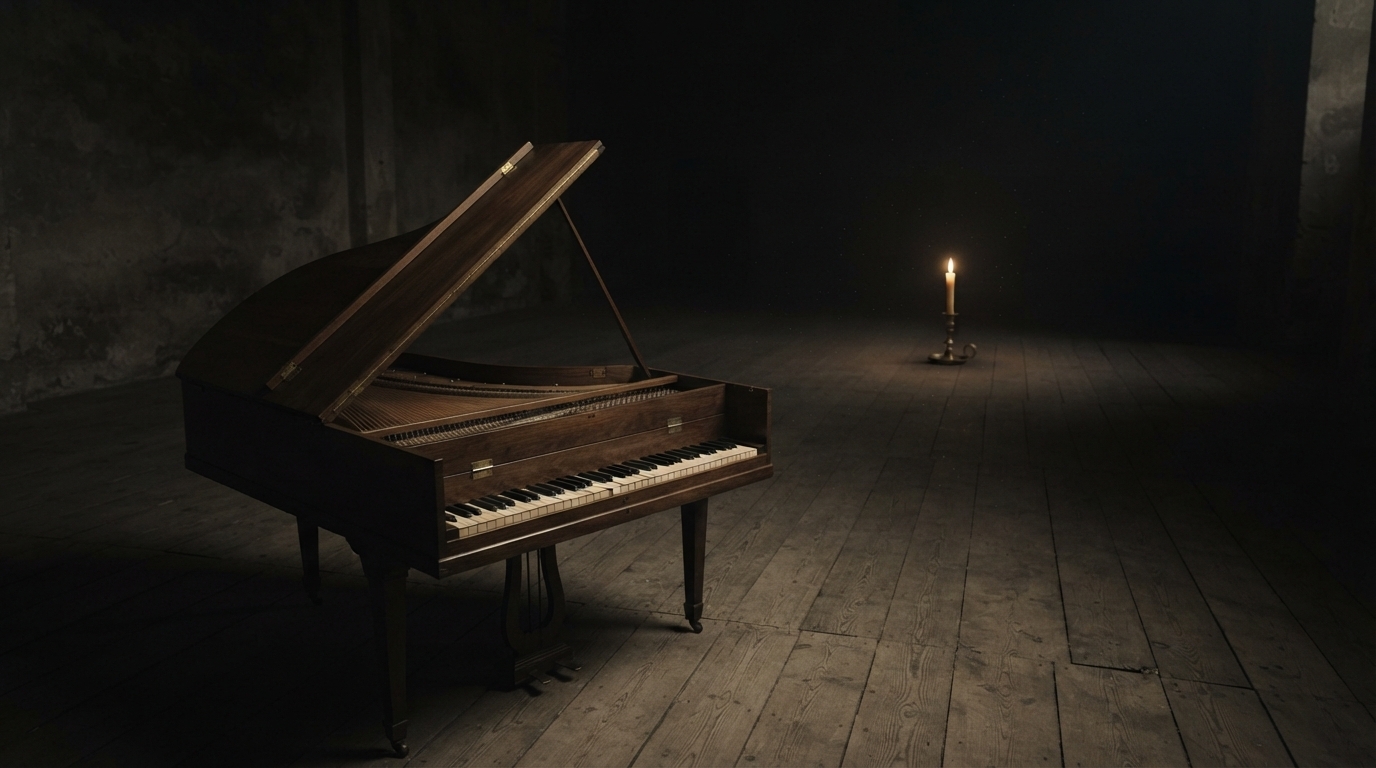
His father was tuning the harpsichord in the next room — a third, a fifth, a third again — and suddenly the boy, sitting on the floor among wood shavings and horse harness, uttered a single note aloud. Not sung, not played. He uttered it the way one names a color or a name.
Leopold Mozart came out of the room with the face of a man who had caught a magician telling the truth. He played the note on the harpsichord. It matched.
"Who told you that was D?" he asked.
The boy did not answer. He was not looking at the harpsichord, but past it, as if there, in the air between the instrument and the window, something was still sounding that his father did not hear at all.
THE HARPSICHORD
By four, he could find a wrong note before it finished sounding. A teacher would strike a chord for his sister's lesson — and the boy, not looking up from his toy, would say: "Not that." It proved true: one string had slightly less tension than the others.
Leopold began keeping a journal of his son's progress with the same meticulousness with which he would have kept a ledger.
The boy did not object. He did not yet know that one could object. He would close his eyes in the middle of a room full of adult voices, and somewhere beyond them there was always another note — unspoken, unplayed. It was more interesting than anything said aloud.
THE COURT
At six, he was seated at the harpsichord before the Empress at Schönbrunn, playing blindfolded — not because the music required it, but because it made a better spectacle.
After the concert, the little Archduchess Maria Antonia helped him up when he slipped on the waxed parquet. He kissed her on the cheek and said seriously that he would marry her when he grew up. The hall laughed.
In the carriage on the way back, Leopold was silent for a long time, then suddenly said, addressing no one: "I am afraid that one day this hall will stop laughing."
Wolfgang said nothing. He looked out the window at the hills receding behind them — never telling his father then or later that he had heard that phrase to its very last word.
THE ROAD
In the carriage, between inns, the boy composed symphonies in his mind — not writing them down, because paper always arrived later, and music could not wait. By the time he reached a harpsichord, the work was complete, from the first note to the final silence after it.
Once, in London, in a cheap apartment near Haymarket where they had been moved after his father fell ill with fever, the boy sat by the bedside and composed nothing. In his head there was genuine, ordinary silence — for the first time in a long while — and he could not tell whether it frightened him or brought him peace.
THE BREAK
Archbishop Colloredo kept him at the Salzburg court as one keeps a good carriage horse: fed on time, not beaten without cause, but never asked where it might want to run.
In the spring of 1781, in Vienna, where the Archbishop had brought his retinue, Mozart submitted his resignation three times — and received irritated silence in return three times. At the Teutonic Order's house, in the antechamber, Chief Steward Count Arco tried for the fourth time to talk him out of it — not roughly, but with the weary condescension of a man who regarded what was happening as a whim.
"Do you understand that no one is waiting for you anywhere?" Arco asked. "Here you have a position. There you have nothing."
"Here I cannot work as I must," said Mozart.
Arco looked at him as one looks at a man who refuses a profitable deal out of superstition. Then, without another word, he took him by the shoulder, turned him toward the door, and pushed him out onto the stairs — not furiously, but methodically, as one dismisses a troublesome supplicant.
Mozart walked out into the street, brushing off his coat.
VIENNA AND CONSTANZE
He married Constanze at St. Stephen's Cathedral and settled in a city as generous to talent as it was eager to celebrate it.
One evening she was telling him about a letter from her sister — at length, in detail, laughing at the right places. He nodded, looked at her face, even said "yes" where expected. When she fell silent and asked: "Did you hear a single word I said?" — he was honestly at a loss. He had heard. But alongside her voice, the finale of a quartet had been sounding in him for the last two hours.
Constanze did not get angry. She simply stood up and walked into the other room — quietly, without a slammed door, which was worse than any scandal.
THE LODGE
In 1784, he joined the Masonic lodge "Zur Wohltätigkeit." The meeting ended late; candles in the hall were burning low, brothers were dispersing softly, steadying each other by the elbow on the dark stairs.
After one such evening, an older brother, dry and imperturbable, asked Mozart directly: did his gift — the ability to hear ahead — prevent him from feeling reverence for the higher order of which the lodge spoke, if he already, in essence, saw that order from within?
"Order is not what I hear," Mozart replied after a pause. "Order is what must be born from the chaos of notes lying randomly on paper before I touch them. I do not see it from above. I drown in it, as in water, and surface with what I have held in my hands."
The brother was silent for a moment, then smiled only with his lips:
"So you are not a priest."
"Probably not," said Mozart, and laughed first.
THE OPERA
One day he dictated the finale of the second act to a copyist — seven voices woven into a single ensemble without a single hesitation. Then he sat down at the instrument to check.
It worked.
Da Ponte, watching from his chair, was silent for a long time, then asked directly:
"Do you hear that, or do you calculate it?"
Mozart thought.
"I don't know," he said. "Perhaps there is no difference."
LETTER FROM SALZBURG
The letter came in the spring of 1787: his father was gravely ill.
He wrote a reply — full of reassurances that there was nothing to fear — and that evening sat down at the harpsichord to, as usual, dissolve the day into sound before sleep. He took his familiar chord, the one on which he usually found calm.
The chord sounded foreign. Not false — just not his. As if the instrument had suddenly spoken a language he had long forgotten, not relearned.
He closed the harpsichord lid and did not open it for three days.
A few weeks later, a second letter came. He read it alone, in an empty room. The silence afterward was the most ordinary silence, the kind that everyone knows.
PUCHBERG
In the autumn of 1789, Michael Puchberg, a brother from the lodge, came to Rauhensteingasse himself — not for a letter, but with a reply to one sent a week earlier.
He found the master of the house with his son Karl on his lap — the boy was five, pulling at his father's sleeve, showing him a wooden horse with a broken leg. Mozart nodded, mending the horse with one hand, while with the other he traced a finger over a sheet of music beside him — not looking at the paper, because he already knew what was written there.
Puchberg held out an envelope — less than had been requested, just enough not to offend with a refusal and not to bankrupt himself with generosity.
"This will last until December," he said quietly, so as not to be heard by the child.
Mozart thanked him — sincerely, without pretense — and, putting away the envelope, noticed that Karl had long since fallen silent and was looking up at him, waiting for his father to return to the horse. He did not immediately understand what the boy's gaze was asking: part of him was still in the measure he had been tracing on the paper.
"Forgive me," he said to his son, not in the tone one uses with a child, but in the tone one uses to apologize to an adult for inattention. "Let me see the horse."
Karl handed him the toy silently, without the earlier insistence.
THE MAN IN GREY
In the summer of 1791, a stranger in a grey cloak knocked at the house on Rauhensteingasse, carrying a sealed letter from an anonymous patron.
The commission was simple: a requiem mass. The fee — generous. The deadline — unstated.
He was going to refuse — he had enough commissions already, and something about this visit had the ring of a bad omen, the kind he preferred not to confront directly. He nearly dismissed the stranger from the doorstep.
Then he sat down at his desk. The room was quiet. And in that silence, the same chord stood again — the same one he had recognized thirty years before. He took up his pen not as a craftsman accepting a commission, but as a man answering a voice that had called him by name.
THE STUDENT
Süssmayr was diligent, meticulous. He listened carefully, transcribed accurately, and still hoped one day to understand where Mozart's music came from.
In the carriage on the road to Prague, Mozart dictated a passage to him by ear — just to see whether the hand could keep up with the voice. Süssmayr transcribed it correctly, though too neatly, as if he were more afraid of making a mistake in someone else's handwriting than in the music itself.
"Do you hear where this is going next?"
Süssmayr shook his head.
"No."
Mozart nodded.
"Write."
THE REQUIEM
Süssmayr sat beside him at the score desk, making a fair copy of what the teacher dictated. One day, having finished the Kyrie, Mozart laid down his pen without checking the parts and pushed the sheet across the table.
"Copy it as it is," he said. "If anything is wrong — you'll decide how to fix it."
Süssmayr looked up at him. Mozart was already looking out the window.
LACRIMOSA
He reached the words "Lacrimosa dies illa" and wrote out eight bars of the vocal line, sketching the orchestration in dots — for hands that would finish afterward, if needed.
On the ninth bar, the pen stopped.
Not because the music had ended — it sounded in him more clearly than ever, complete from first note to last. But because his body could no longer hold his hand as long as the phrase required.
He called Constanze — not to say goodbye, but to ask her to sit beside him in silence, not telling him anything, just being there.
She sat and took his hand. He said nothing. She did not ask.
By the night of December 5, the room had become quiet with the silence that everyone knows.
THE SILENCE AFTER
The score remained on the table: Introitus and Kyrie — fully completed; Dies irae and Lacrimosa — carried only as far as the ninth bar.
Franz Xaver Süssmayr sat over it for several evenings, unable to begin. He knew how to write down what he heard. But now he had to hear what no one could repeat.
On the fifth evening, he took up his pen, looked at the broken line — and wrote the next bar. Not because he had suddenly understood how to continue another man's design. But because in the room, where there was not a single sound, he suddenly heard something — short, hesitant, as if someone had reminded him of a long-forgotten name.
He wrote the note and did not reread what he had written.
He was three years old when he first heard a sound that no one had made.
His father was tuning the harpsichord in the next room — a third, a fifth, a third again — and suddenly the boy, sitting on the floor among wood shavings and horse harness, uttered a single note aloud. Not sung, not played. He uttered it the way one names a color or a name.
Leopold Mozart came out of the room with the face of a man who had caught a magician telling the truth. He played the note on the harpsichord. It matched.
"Who told you that was D?" he asked.
The boy did not answer. He was not looking at the harpsichord, but past it, as if there, in the air between the instrument and the window, something was still sounding that his father did not hear at all.
THE HARPSICHORD
By four, he could find a wrong note before it finished sounding. A teacher would strike a chord for his sister's lesson — and the boy, not looking up from his toy, would say: "Not that." It proved true: one string had slightly less tension than the others.
Leopold began keeping a journal of his son's progress with the same meticulousness with which he would have kept a ledger.
The boy did not object. He did not yet know that one could object. He would close his eyes in the middle of a room full of adult voices, and somewhere beyond them there was always another note — unspoken, unplayed. It was more interesting than anything said aloud.
THE COURT
At six, he was seated at the harpsichord before the Empress at Schönbrunn, playing blindfolded — not because the music required it, but because it made a better spectacle.
After the concert, the little Archduchess Maria Antonia helped him up when he slipped on the waxed parquet. He kissed her on the cheek and said seriously that he would marry her when he grew up. The hall laughed.
In the carriage on the way back, Leopold was silent for a long time, then suddenly said, addressing no one: "I am afraid that one day this hall will stop laughing."
Wolfgang said nothing. He looked out the window at the hills receding behind them — never telling his father then or later that he had heard that phrase to its very last word.
THE ROAD
In the carriage, between inns, the boy composed symphonies in his mind — not writing them down, because paper always arrived later, and music could not wait. By the time he reached a harpsichord, the work was complete, from the first note to the final silence after it.
Once, in London, in a cheap apartment near Haymarket where they had been moved after his father fell ill with fever, the boy sat by the bedside and composed nothing. In his head there was genuine, ordinary silence — for the first time in a long while — and he could not tell whether it frightened him or brought him peace.
THE BREAK
Archbishop Colloredo kept him at the Salzburg court as one keeps a good carriage horse: fed on time, not beaten without cause, but never asked where it might want to run.
In the spring of 1781, in Vienna, where the Archbishop had brought his retinue, Mozart submitted his resignation three times — and received irritated silence in return three times. At the Teutonic Order's house, in the antechamber, Chief Steward Count Arco tried for the fourth time to talk him out of it — not roughly, but with the weary condescension of a man who regarded what was happening as a whim.
"Do you understand that no one is waiting for you anywhere?" Arco asked. "Here you have a position. There you have nothing."
"Here I cannot work as I must," said Mozart.
Arco looked at him as one looks at a man who refuses a profitable deal out of superstition. Then, without another word, he took him by the shoulder, turned him toward the door, and pushed him out onto the stairs — not furiously, but methodically, as one dismisses a troublesome supplicant.
Mozart walked out into the street, brushing off his coat.
VIENNA AND CONSTANZE
He married Constanze at St. Stephen's Cathedral and settled in a city as generous to talent as it was eager to celebrate it.
One evening she was telling him about a letter from her sister — at length, in detail, laughing at the right places. He nodded, looked at her face, even said "yes" where expected. When she fell silent and asked: "Did you hear a single word I said?" — he was honestly at a loss. He had heard. But alongside her voice, the finale of a quartet had been sounding in him for the last two hours.
Constanze did not get angry. She simply stood up and walked into the other room — quietly, without a slammed door, which was worse than any scandal.
THE LODGE
In 1784, he joined the Masonic lodge "Zur Wohltätigkeit." The meeting ended late; candles in the hall were burning low, brothers were dispersing softly, steadying each other by the elbow on the dark stairs.
After one such evening, an older brother, dry and imperturbable, asked Mozart directly: did his gift — the ability to hear ahead — prevent him from feeling reverence for the higher order of which the lodge spoke, if he already, in essence, saw that order from within?
"Order is not what I hear," Mozart replied after a pause. "Order is what must be born from the chaos of notes lying randomly on paper before I touch them. I do not see it from above. I drown in it, as in water, and surface with what I have held in my hands."
The brother was silent for a moment, then smiled only with his lips:
"So you are not a priest."
"Probably not," said Mozart, and laughed first.
THE OPERA
One day he dictated the finale of the second act to a copyist — seven voices woven into a single ensemble without a single hesitation. Then he sat down at the instrument to check.
It worked.
Da Ponte, watching from his chair, was silent for a long time, then asked directly:
"Do you hear that, or do you calculate it?"
Mozart thought.
"I don't know," he said. "Perhaps there is no difference."
LETTER FROM SALZBURG
The letter came in the spring of 1787: his father was gravely ill.
He wrote a reply — full of reassurances that there was nothing to fear — and that evening sat down at the harpsichord to, as usual, dissolve the day into sound before sleep. He took his familiar chord, the one on which he usually found calm.
The chord sounded foreign. Not false — just not his. As if the instrument had suddenly spoken a language he had long forgotten, not relearned.
He closed the harpsichord lid and did not open it for three days.
A few weeks later, a second letter came. He read it alone, in an empty room. The silence afterward was the most ordinary silence, the kind that everyone knows.
PUCHBERG
In the autumn of 1789, Michael Puchberg, a brother from the lodge, came to Rauhensteingasse himself — not for a letter, but with a reply to one sent a week earlier.
He found the master of the house with his son Karl on his lap — the boy was five, pulling at his father's sleeve, showing him a wooden horse with a broken leg. Mozart nodded, mending the horse with one hand, while with the other he traced a finger over a sheet of music beside him — not looking at the paper, because he already knew what was written there.
Puchberg held out an envelope — less than had been requested, just enough not to offend with a refusal and not to bankrupt himself with generosity.
"This will last until December," he said quietly, so as not to be heard by the child.
Mozart thanked him — sincerely, without pretense — and, putting away the envelope, noticed that Karl had long since fallen silent and was looking up at him, waiting for his father to return to the horse. He did not immediately understand what the boy's gaze was asking: part of him was still in the measure he had been tracing on the paper.
"Forgive me," he said to his son, not in the tone one uses with a child, but in the tone one uses to apologize to an adult for inattention. "Let me see the horse."
Karl handed him the toy silently, without the earlier insistence.
THE MAN IN GREY
In the summer of 1791, a stranger in a grey cloak knocked at the house on Rauhensteingasse, carrying a sealed letter from an anonymous patron.
The commission was simple: a requiem mass. The fee — generous. The deadline — unstated.
He was going to refuse — he had enough commissions already, and something about this visit had the ring of a bad omen, the kind he preferred not to confront directly. He nearly dismissed the stranger from the doorstep.
Then he sat down at his desk. The room was quiet. And in that silence, the same chord stood again — the same one he had recognized thirty years before. He took up his pen not as a craftsman accepting a commission, but as a man answering a voice that had called him by name.
THE STUDENT
Süssmayr was diligent, meticulous. He listened carefully, transcribed accurately, and still hoped one day to understand where Mozart's music came from.
In the carriage on the road to Prague, Mozart dictated a passage to him by ear — just to see whether the hand could keep up with the voice. Süssmayr transcribed it correctly, though too neatly, as if he were more afraid of making a mistake in someone else's handwriting than in the music itself.
"Do you hear where this is going next?"
Süssmayr shook his head.
"No."
Mozart nodded.
"Write."
THE REQUIEM
Süssmayr sat beside him at the score desk, making a fair copy of what the teacher dictated. One day, having finished the Kyrie, Mozart laid down his pen without checking the parts and pushed the sheet across the table.
"Copy it as it is," he said. "If anything is wrong — you'll decide how to fix it."
Süssmayr looked up at him. Mozart was already looking out the window.
LACRIMOSA
He reached the words "Lacrimosa dies illa" and wrote out eight bars of the vocal line, sketching the orchestration in dots — for hands that would finish afterward, if needed.
On the ninth bar, the pen stopped.
Not because the music had ended — it sounded in him more clearly than ever, complete from first note to last. But because his body could no longer hold his hand as long as the phrase required.
He called Constanze — not to say goodbye, but to ask her to sit beside him in silence, not telling him anything, just being there.
She sat and took his hand. He said nothing. She did not ask.
By the night of December 5, the room had become quiet with the silence that everyone knows.
THE SILENCE AFTER
The score remained on the table: Introitus and Kyrie — fully completed; Dies irae and Lacrimosa — carried only as far as the ninth bar.
Franz Xaver Süssmayr sat over it for several evenings, unable to begin. He knew how to write down what he heard. But now he had to hear what no one could repeat.
On the fifth evening, he took up his pen, looked at the broken line — and wrote the next bar. Not because he had suddenly understood how to continue another man's design. But because in the room, where there was not a single sound, he suddenly heard something — short, hesitant, as if someone had reminded him of a long-forgotten name.
He wrote the note and did not reread what he had written.
2026 © Iskandar Kadyrov • All rights reserved • RU / EN (18+)
See also